

 русский
 Français
 Español
 عربى
 italiano

Chrome Motorcycle Helmets: Finish, Fit, Certification and Sourcing Notes
Content
- 1 What "Chrome" Actually Means on a Helmet
- 2 The Trade-offs of a Mirror Finish
- 3 Matching Chrome to the Right Shell Style
- 4 Certification Comes Before Cosmetics
- 5 Glare, Visors and Local Rules
- 6 Keeping a Chrome Helmet Looking New
- 7 Ordering Chrome Helmets in Volume
- 8 Five Questions Before You Buy or Place an Order
Ask any rider who has stopped in front of a chrome motorcycle helmet in a shop window and you will hear the same thing: it is hard to look away. A mirror-polished shell catches light in a way that paint simply cannot, and it has been part of chopper culture, custom builds and retro touring for decades. Having spent twenty years building helmets on our own production lines, we have seen chrome finishes succeed beautifully and fail badly, and the difference rarely comes down to the shine itself. Below we walk through what a chrome finish really is, where it performs well, where it demands extra care, and what both riders and importers should check before committing to a purchase.
What "Chrome" Actually Means on a Helmet
Chrome is a finish, not a material. The shell underneath is still thermoplastic, fiberglass or another composite, and the impact performance of the helmet is decided by the shell, the liner and the retention system long before the cosmetics enter the picture. On a modern production line, the mirror surface is normally created by vacuum metallization rather than traditional electroplating, which would add weight and cost with no real benefit for a helmet.
The process usually runs in a few clear stages:
- A smooth base coat is sprayed onto the prepared shell and cured until it is completely level.
- The shell goes into a vacuum chamber, where a very thin aluminum layer is deposited over the base coat.
- A protective clear coat is applied on top to seal the metal layer against moisture, fuel spills and ultraviolet light.
- Optional tinted lacquers create black chrome, gunmetal or gold variants while keeping the same reflective character.
The quality of the base coat and the clear coat matters far more than the thickness of the metal layer, which is measured in fractions of a micron. A well-built chrome shell survives years of road use; a poorly sealed one starts to cloud or flake within a single season, usually around the edges of vents and the visor aperture where moisture collects.
The Trade-offs of a Mirror Finish
Chrome is a design decision with practical consequences, and it helps to be honest about both sides. Riders love it because it photographs well, matches chrome exhausts and engine cases, and makes a helmet feel custom even when it is a standard production model. Owners also tell us the metallized surface stays marginally cooler in strong sun than a dark gloss shell. The costs are equally real: fingerprints, water spots and fine swirl marks all show up more clearly than on matte or satin finishes, and a stone chip in a mirror surface is much harder to hide.
| Aspect | What to expect with chrome | What to check before ordering |
|---|---|---|
| Appearance | High-impact mirror look, ideal for cruisers and retro builds | Finish consistency between the shell and the trim parts |
| Scratches | Fine swirls and chips are more visible than on matte shells | Clear-coat quality and availability of replacement shells |
| Cleaning | Fingerprints and water marks show almost immediately | Recommended cleaner type and cloth supplied with the goods |
| Glare | Reflects strong sunlight and can distract in dense traffic | Visor options, especially a clear visor for night riding |
| Cost | Higher than a single-color gloss paint because of extra process steps | Whether the price includes the same certification testing |
Matching Chrome to the Right Shell Style
Chrome has natural homes in the range. It is most at ease on half-face and retro open-face shapes, where a rounded shell gives the metal layer a broad, uninterrupted surface to reflect from. The classic half-face silhouette, with a low profile and simple trim, is where most chrome orders start, and a well-sealed ABS shell keeps the finish affordable without compromising the shape.
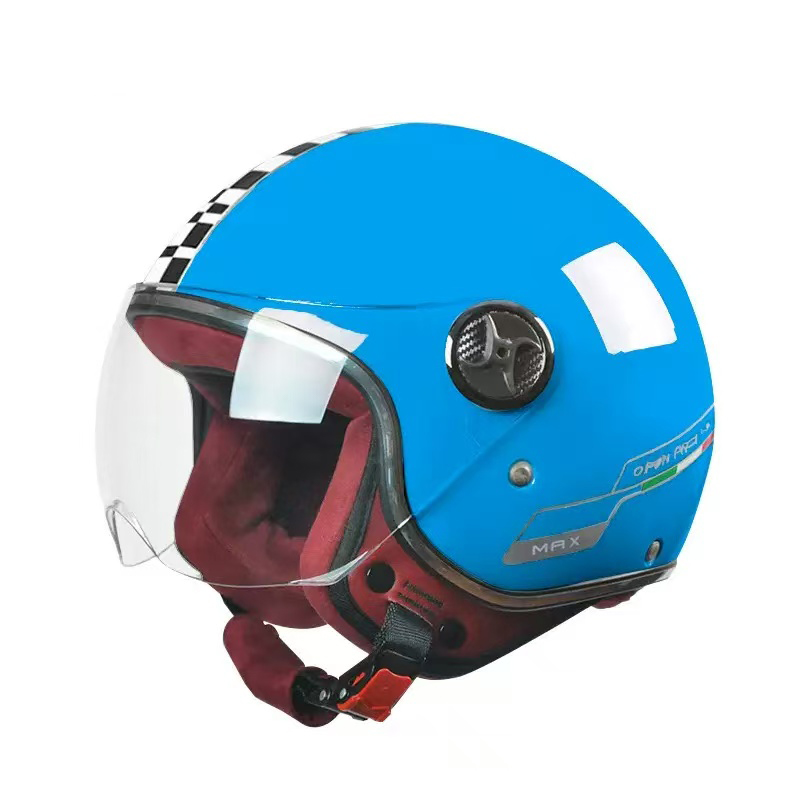 AD 519 Retro Half-Face Motorcycle HelmetA CCC-certified retro half-face helmet with ABS shell, EPS liner, and clear or black visor options for urban commuting.View Product →
Open-face models carry chrome equally well, particularly when the finish is paired with a double-visor setup, because the built-in sun shield lets the rider keep a clear main visor and still handle bright afternoon light. For touring riders who want that retro look with a certified shell, a DOT-rated open-face is usually the sensible middle ground between style and everyday practicality.
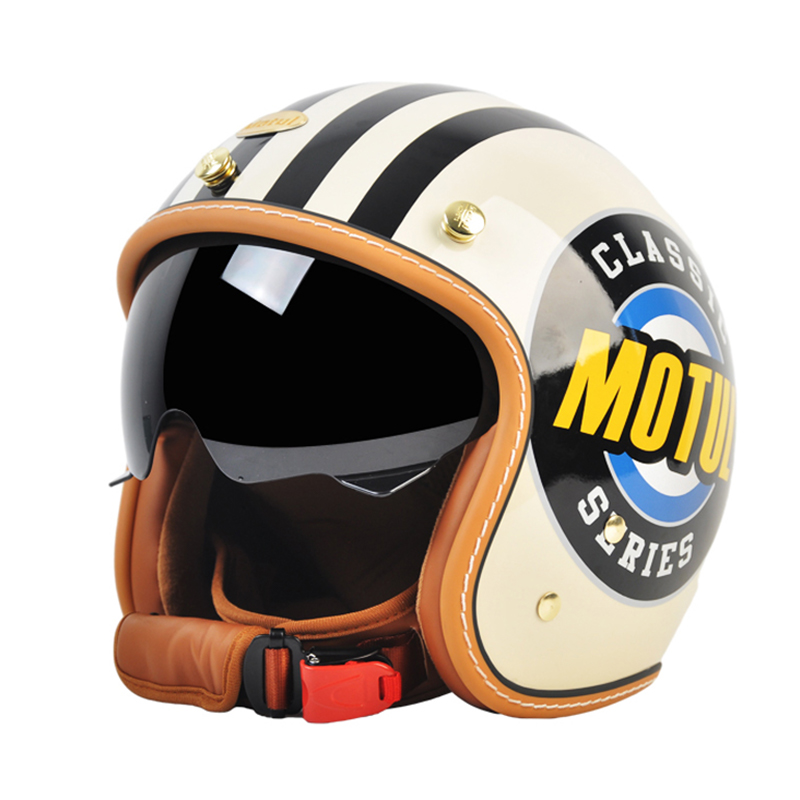 AD MT901 DOT Retro Open-Face HelmetDOT-certified retro open-face helmet with ABS shell, built-in sun visor, detachable lining and optional bubble visors for commuting and touring.View Product →
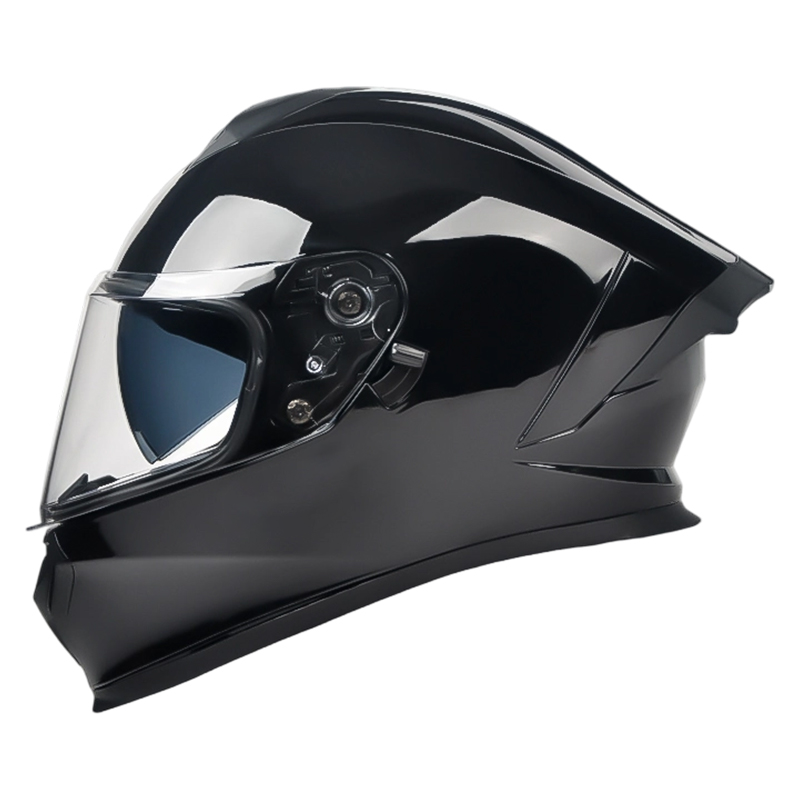
Full-face helmets can wear chrome too, and a mirror shell on a sport or motocross-inspired model makes a strong statement on the road. The caveat is that full-face shells have more complex curvature, more vents and more edges, so the finish demands tighter process control. On these models we recommend keeping the mirror coating away from the vent inserts and inspecting those boundaries during incoming quality checks.
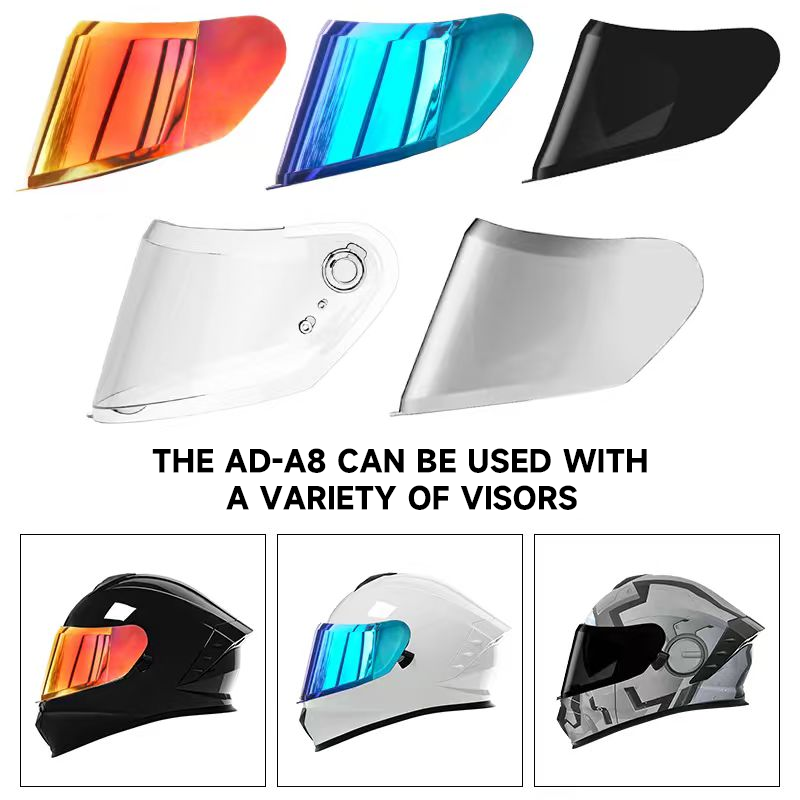 AD A8 DOT Full-Face Motorcycle HelmetDOT-certified full-face helmet with ABS shell, EPS liner, ventilation channels and Bluetooth earphone slot for daily riding.View Product →
Certification Comes Before Cosmetics
A mirror finish never exempts a helmet from the standards it will be sold under. Depending on the destination market, buyers generally look for DOT under FMVSS 218 for the United States, ECE R22.06 for Europe and much of the Middle East, and CCC for China, often alongside an ISO 9001 quality system at the factory level. Cosmetics should sit on top of a compliant design, not replace it.
Two practical points are worth raising with any supplier. First, the finish must not obscure the shell in a way that hides hairline cracks during inspection, so the clear coat should stay thin and transparent rather than heavily tinted. Second, labels and certification markings need to survive the same cleaning routine as the shell. For teams comparing suppliers on paperwork and testing, this overview of helmet manufacturer certification and procurement is a useful starting point before the first sample round.
Glare, Visors and Local Rules
A chrome shell is generally treated as a cosmetic finish, but mirrored visors are a separate question. Several countries restrict heavily reflective visors for road use, and some prohibit them at night regardless of the shell behind them. If you are building a chrome-themed range for multiple markets, keep a clear visor in the accessory list and confirm local requirements rather than assuming one configuration travels everywhere. It is also worth reminding riders that a chrome shell catches daylight but is not retroreflective, so commuters who ride after dark still benefit from reflective strips or high-visibility clothing.
Keeping a Chrome Helmet Looking New
The finish will last considerably longer with a simple routine, and the advice we give riders is the same advice we give distributors who handle warranty questions.
- Clean with lukewarm water and a few drops of mild soap, never with solvent, acetone or ammonia-based glass sprays.
- Use a soft microfiber cloth and blot rather than scrub, especially around the visor aperture and vent edges.
- Skip abrasive polishes and cutting compounds; they thin the clear coat and dull the metal layer underneath.
- Dry the shell with a separate cloth to avoid water spots, which etch more visibly on mirror surfaces.
- Store the helmet in its bag, away from direct sun and from fuel or brake fluid spills in the garage.
- Inspect the shell for chips after any drop, and replace the helmet if the shell or liner shows damage.
Ordering Chrome Helmets in Volume
For importers, distributors and brand owners, chrome is usually one colorway within a broader program rather than a standalone product. That makes consistency the central issue: the mirror tone on a reorder needs to match the first shipment, and the clear coat needs to behave the same way across summer and winter production. Our own factory near Shanghai, with more than 10,000 square meters of floor space and a team of over 100 people, runs chrome and painted shells on the same lines, which is why we ask buyers to lock the finish specification early, including base substrate, bright or black chrome tone, decal placement under or over the clear coat, and logo method.
Sampling is where most of the risk is removed. We typically turn samples around in about three days so that a buyer can hold the finish, check it against a paint chip or an existing helmet, and run a quick rub test with the cleaner their market actually uses. Under our AD brand and through OEM and ODM work for clients across North America, South America, the Middle East, Southeast Asia and Africa, we have learned that a five-minute conversation about cleaning habits prevents most chrome-related complaints later.
Five Questions Before You Buy or Place an Order
Whether you are buying a single helmet for a weekend build or specifying a container load, the same short checklist keeps the decision grounded.
- Which standard does the helmet carry, and is the test report available for the exact model and market?
- Is the mirror surface a metallized coating with a clear top coat, or a chrome-look paint that will age differently?
- Which visor comes in the box, and does a clear option exist for night riding?
- How should the shell be cleaned, and what does the supplier's warranty cover if the finish clouds?
- Can the factory match the finish on reorders, and how is that tone recorded in the specification?
Get those answers in writing and a chrome motorcycle helmet stops being a gamble on shine. It becomes a well-understood product: a certified shell, a carefully sealed reflective finish, and an owner who knows exactly how to keep it looking the way it did on the day it left the box.