

 русский
 Français
 Español
 عربى
 italiano

Arai Helmet Measurements: How to Measure Your Head and Choose the Right Size
Content
- 1 What the Arai Size Chart Is Actually Measuring
- 2 How to Measure Your Head at Home
- 3 Arai Size Ranges at a Glance
- 4 Shape Matters as Much as Size
- 5 Tuning the Fit With Liners and Cheek Pads
- 6 Five Checks Once the Helmet Arrives
- 7 Measurement Mistakes That Lead to Returns
- 8 The Same Number Fits Differently Across Helmet Types
- 9 What This Means When You're Sourcing at Volume
- 10 Final Thoughts
Ask a fitter at any track day and you will hear the same story: most sizing complaints begin with a tape measure, not with the helmet. Arai publishes its own size charts, and they are a sensible place to start, but those numbers only work when the tape goes around your head the way the chart assumes it will.
We have been building motorcycle helmets for more than twenty years, and we have watched the same confusion repeat itself in every market we ship to. What follows is a practical walkthrough of Arai helmet measurements — how to take them, how to read the chart, and what to do when your number lands exactly on a boundary between two sizes.
What the Arai Size Chart Is Actually Measuring
Arai sizes are built around head circumference, often written as HCM on the brand's own sizing pages. That is the distance around the widest part of your skull, roughly one inch above the eyebrows and ears. Everything else in the fit system — the outer shell, the comfort liner, the cheek pads — is arranged around that single number.
Two details are easy to miss. First, the chart is metric, so a measurement taken in inches needs converting before you compare it to anything. Second, each label describes a range rather than a point: a medium covers 57 to 58 cm, which means two riders with measurable 1 cm difference can both wear the same nominal size and still feel very differently about it. The label is a starting coordinate, not a verdict.
It also helps to understand that the shell and the padding are separate decisions. A manufacturer may use one shell for two or three labeled sizes and make up the difference with thicker or thinner liners. That is why the outer dimensions of a medium and a large sometimes look nearly identical on the shelf.
How to Measure Your Head at Home
You need one flexible tape measure and about three minutes. A cloth tailor's tape works best; a stiff metal tape tends to bridge the curve of the skull and shave a centimetre off the real figure.
- Comb your hair flat. Thick hair, a bun, or a cap adds volume the chart does not account for.
- Place the tape about one inch above the eyebrows, at the level where a hat band would sit.
- Wrap it around the back of the head at the widest point, just above the ears, keeping it level all the way round.
- Pull until the tape is snug against the skin but not indenting it. You should be able to slide one finger underneath, no more.
- Check the tape is horizontal in a mirror. A tape that rides up at the back is the single most common measuring error.
- Repeat the measurement three times and take the largest consistent reading, not the average of three different ones.
- Write the number down in centimetres. Memory is unreliable, and you will want it when comparing models.
Arai Size Ranges at a Glance
Below are the published head-circumference ranges Arai uses for its motorcycle helmets. Treat the boundaries with a little suspicion: if your measurement lands on 57 or 59, you are a candidate for either neighbouring size.
| Label | Head circumference (cm) |
|---|---|
| 3XS | 49–50 |
| XXS | 51–52 |
| XS | 53–54 |
| S | 55–56 |
| M | 57–58 |
| L | 59–60 |
| XL | 61–62 |
Shape Matters as Much as Size
Arai builds around an intermediate oval interior, meaning the shell is slightly longer front to back than it is wide side to side. That suits a large share of riders, but not all of them. A rider with a rounder head and a 58 cm circumference may find pressure at the temples in a medium, while a rider with a longer, narrower head at the same circumference may feel the forehead contact before anything else.
This is where measurement stops being arithmetic and becomes judgement. If you know your head is rounder or longer than average, use the chart as a midpoint and let the test fit decide. Buying one size up simply because the tape says so is how people end up with a helmet that rotates on the head at speed.
Tuning the Fit With Liners and Cheek Pads
Some Arai models, including the Defiant-X and Regent-X, are sold with interior lining and cheek pad thickness options. This is the part most riders overlook, and it is often the difference between a helmet that feels acceptable and one you forget you are wearing. A thinner cheek pad opens up space at the jaw; a thicker one locks the head in place without changing the shell size at all.
From a manufacturing standpoint, this is exactly why we treat padding density and thickness as a design variable rather than an afterthought. The shell carries the structure, but the liner carries the comfort, and the two need to be matched deliberately. A lightweight full-face shell only performs as intended when the liner behind it is shaped for the same head form — our own fiberglass full-face models are built around that principle.
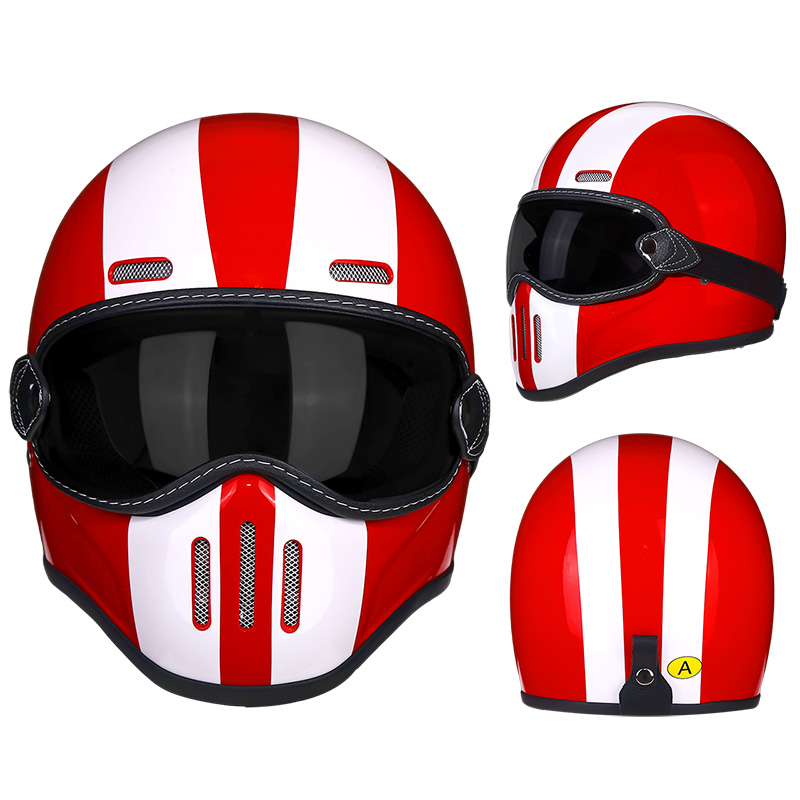 MT801 Fiberglass Full-Face Motorcycle HelmetA fiberglass full-face helmet with CCC approval and a high-density EPS liner, offered in M–L–XL with removable breathable padding for fit adjustment.View Product →
If a helmet fits at the crown but moves at the jaw, the answer is usually a pad change, not a shell change. Keep that in mind before you return a helmet that is close but not quite right.
Five Checks Once the Helmet Arrives
- The roll test. With the chin strap undone, hold the helmet by the chin bar and try to roll it forward off your head. The skin at your forehead should move with it. If the helmet slides free, it is too large.
- Cheek pressure. New cheek pads should press firmly enough to feel slightly tight and should relax within a few weeks of use. Nothing should pinch.
- Forehead contact. A red mark after twenty minutes of wear signals a pressure point, not a break-in period.
- Eyeport alignment. The opening should sit level, with your eyebrows just below the upper edge and no shell blocking your peripheral view.
- Strap and retention. Once fastened, the helmet should not lift when you push up gently from the chin bar.
Measurement Mistakes That Lead to Returns
- Measuring over hair that will be braided, tied, or covered on the day you actually ride.
- Letting the tape sag at the back of the head, which reads low by half a size or more.
- Converting a hat size directly. Hat sizing and helmet sizing follow different conventions and are not interchangeable.
- Trusting the label on an old helmet. Comfort foam compresses over years, so an eight-year-old large is not the same fit as a new large.
- Measuring in inches and rounding casually in the conversion, which is enough to shift you across a boundary.
The Same Number Fits Differently Across Helmet Types
Head circumference is universal, but the way a shell wraps the head is not. A half-face or open-face helmet contacts the skull along a different line than a full-face, and the absence of a chin bar changes how the whole assembly sits. A rider who measures 57 cm and wears a medium full-face may prefer a slightly different size in a retro half-face cut, where the shell sits lower at the nape.
Children deserve their own note here. Young heads grow quickly, and a measurement taken in spring may be misleading by autumn, so check the circumference every few months rather than assuming last year's number still holds. Our kids helmet range is sized with that growth curve in mind.
Retro and cruiser styles are a good example of a case where fit and proportion are judged together. A shell that is correctly sized but too bulky around the ears will never feel right, however accurate the tape reading was.
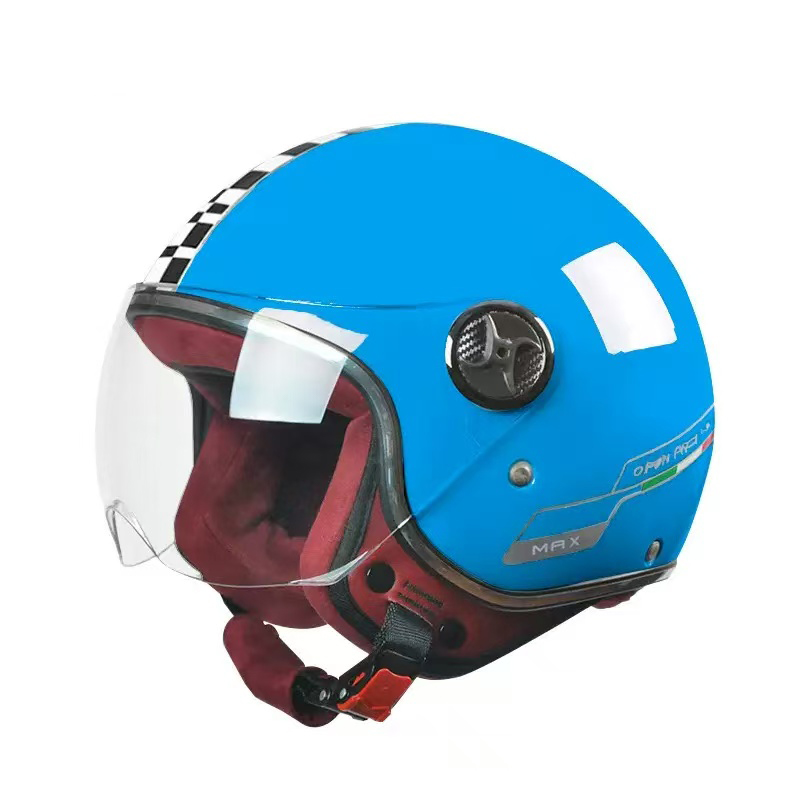 AD 519 Retro Half-Face Motorcycle HelmetA CCC-certified retro half-face helmet in sizes 55–60 cm, with ABS shell, EPS liner and breathable cotton padding for urban commuting.View Product →
What This Means When You're Sourcing at Volume
For buyers, distributors, and brand owners, the sizing conversation shifts from "which label am I" to "which size curve does my market expect". A chart that works for one region's rider population may leave another market with a high exchange rate, which is expensive for everyone. That is why we publish circumference ranges per model and keep liner thickness as an adjustable specification during OEM and ODM development, rather than locking it in at the first sample.
Two practical habits save a great deal of trouble. First, ask for the size curve alongside the physical samples so you can compare numbers before you compare looks. Second, confirm the certification position for the target market early, because compliance and fit are decided at the same drawing-board stage — a point we cover in more detail in our note on helmet certification and procurement.
Modular designs add one more variable: the flip-up mechanism and its surrounding padding occupy space that a fixed full-face does not need to account for, so the interior geometry has to be planned carefully to avoid pressure at the temples. Models in our flip-up line are developed with that clearance in mind, and the same logic applies to the LED-equipped versions where internal wiring runs behind the liner.
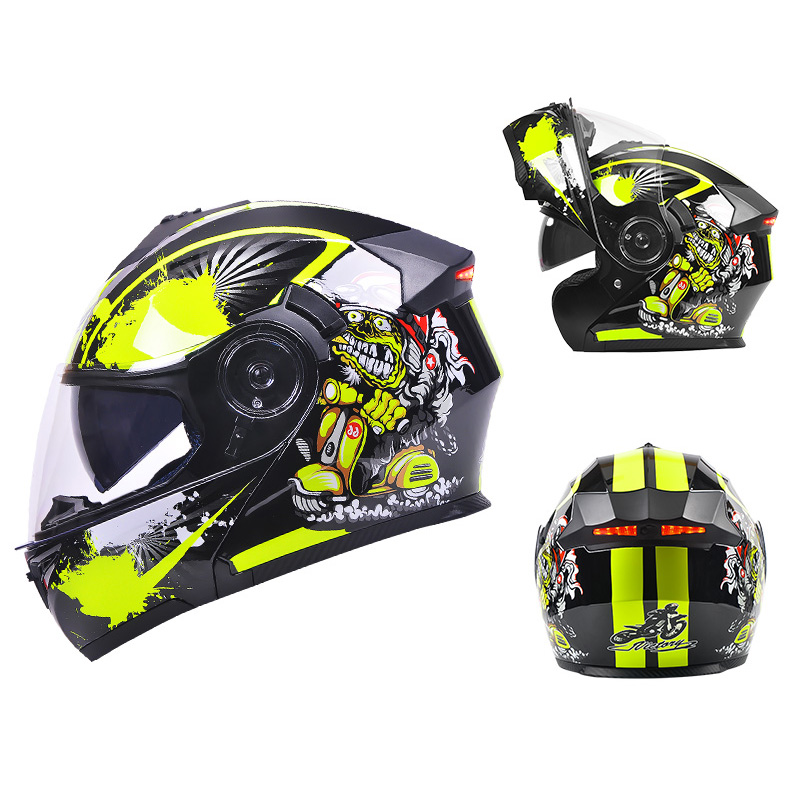 AD 108 LED Flip-Up Motorcycle HelmetA DOT-certified modular helmet with four-mode LED taillight, inner sun visor, Bluetooth slot and breathable removable lining for commuting and touring.View Product →
Final Thoughts
Arai helmet measurements come down to one honest number taken with a cloth tape, one chart read carefully, and a test fit that respects the shape of your head. If your measurement sits on a boundary, let comfort at the crown decide, and remember that liners and cheek pads can fine-tune what the shell provides.
After two decades of building helmets, we still think the tape measure is the most underrated tool in motorcycling. Take the measurement twice, write it down, and you will spend far less time sending helmets back and far more time riding.