

 русский
  Français
  Español
  عربى
عربى  italiano
Bike Helmet Buying Guide 2026: Fit, Safety Standards, Materials, Types
Content
A bike helmet is a safety device, but the way most riders choose one is closer to shopping for a hat. They look at price, color, and weight, then assume the store listed the right product for the right reason. That assumption can fail in predictable ways. A road cyclist who buys a dirt-style helmet gets extra visor coverage but worse airflow. A motorcycle commuter who buys a bicycle helmet gets almost no face protection and a shell that is not tested for highway impact speeds. The conclusion is that no single best bike helmet exists. The correct purchase depends on the standard that applies to your vehicle, the fit around your head, and the specific conditions you ride in.
Why the Certification Standard Comes First
Before anything else, confirm which safety standard the helmet meets. The label is not a marketing slogan. It means a certified sample survived a set of impact, retention, and penetration tests administered to a defined threshold. Bicycle helmets are generally lighter and better ventilated because they are tested for lower impact energy. Motorcycle helmets are heavier, cover more of the head, and sometimes include a chin bar because they must manage the much higher forces of motorized riding.
| Standard | Applies to | Typical markets | What the test verifies |
|---|---|---|---|
| CPSC 16 CFR 1203 | Bicycle helmets | United States | Impact attenuation, strap strength, coverage |
| EN 1078 | Bicycle helmets | European Union, UK | Impact absorption, retention system, field of view |
| DOT FMVSS 218 | Motorcycle helmets | United States | Impact energy, penetration resistance, chin strap retention |
| ECE R22.06 | Motorcycle helmets | Europe, Asia, Latin America, and other regions | Impact absorption, abrasion resistance, visor performance, retention |
| CCC | Motorcycle helmets | China | Mandatory compliance tests for helmets sold in the Chinese market |
For buyers in the United States, bicycle helmets carry a CPSC label, while many European bicycle helmets follow EN 1078. Motorcycle helmets sold in the United States need DOT FMVSS 218 approval, and international markets commonly require ECE R22.06. China uses CCC. When a helmet passes one of these, you can compare construction and features without worrying that you are comparing life-safety equipment to unregulated plastic shells. This is also why experienced procurement teams treat factory certifications as the first filter before they talk about pricing, because certification status changes what a helmet manufacturer can legally ship and where.
Can you wear a motorcycle helmet while cycling? You can, but it is too heavy and hot for pedal speeds, and the field of view is designed around a different riding position. Can you wear a bicycle helmet on a motorcycle? No. It is not tested for the impact speeds and mass typical of motorized riding, and it usually offers little or no face protection. Match the standard to the machine.
How the Shell Material Affects Your Choice
Once the standard is confirmed, the next visible difference is the shell material. Under every helmet shell there is an expanded polystyrene liner that absorbs impact energy by crushing. The shell spreads the force across the liner and resists penetration. Both layers matter, but the shell material influences weight, durability, cost, and finish quality.
| Shell material | Weight and feel | Typical use | Price level |
|---|---|---|---|
| ABS plastic | Heavier, very durable, easy to paint | Entry-level motorcycle, kids, budget helmets | Low |
| Polycarbonate in-mold | Light, bonded to the liner, less resistant to scraping | Road and urban bicycle helmets | Low to mid |
| Fiberglass composite | Mid-weight, high strength, good vibration damping | Mid-range motorcycle full-face helmets | Mid |
| Carbon fiber | Lightest, stiffest, most expensive | Premium motorcycle and motocross helmets | High |
In a manufacturer's lineup, the same base model may be offered in fiberglass and carbon fiber. The carbon fiber version saves several hundred grams and changes the balance on the neck, but it does not automatically earn a higher survival rating. Spend what your budget allows after the standard and fit are solved.
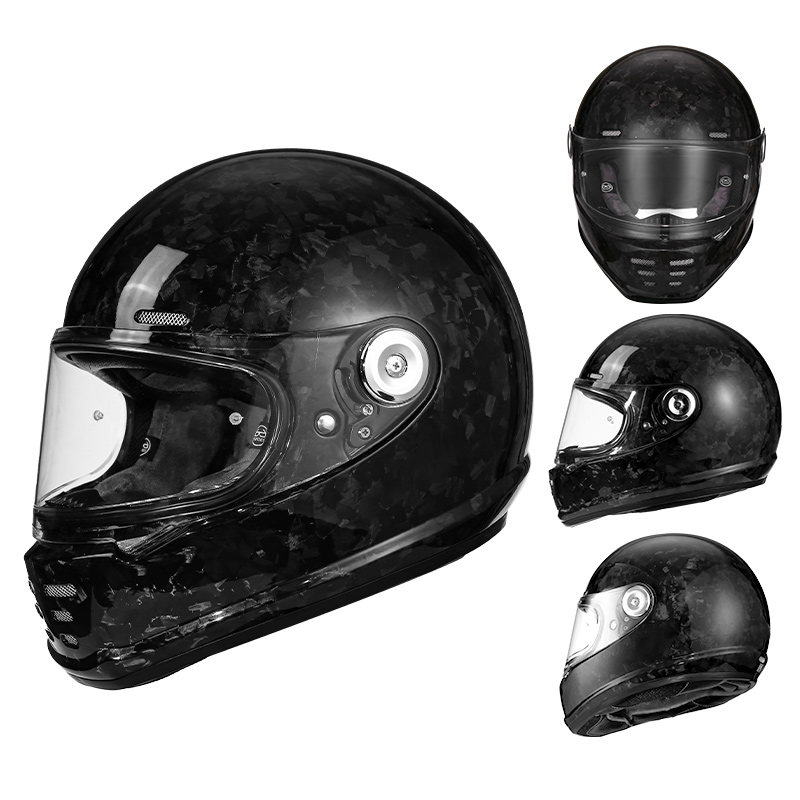 Carbon Fiber Full Face Motorcycle Helmet with DOT CertificationThis lightweight carbon fiber full-face helmet balances protection and daily comfort for commuting and touring. Its DOT approval and ergonomic design make it a practical choice when weight and safety both matter.View Product →
Match the Helmet to the Riding You Actually Do
The shape of the helmet must match the riding position and terrain. The right frame is not the one that looks best in a parking lot. It is the one that stays stable when wind, vibration, and body movement load the shell.
Road and urban cycling
For pavement riding, look for an aerodynamic rounded shape with enough vents to keep the head cool at moderate speed. Commuters who share roads with vehicles should prioritize rear coverage and consider a taillight built into the shell. A bicycle helmet should sit above the ears and offer wide peripheral vision.
Mountain biking and off-road
Trail riders need more rear and side coverage than road riders, plus a visor to block branches and glare. Downhill and motocross riders need full-face protection. Some riders choose DOT-rated full-face models because the chin bar and deeper shell are built for faster impacts and harder terrain. The added weight is a fair trade for the additional face protection.
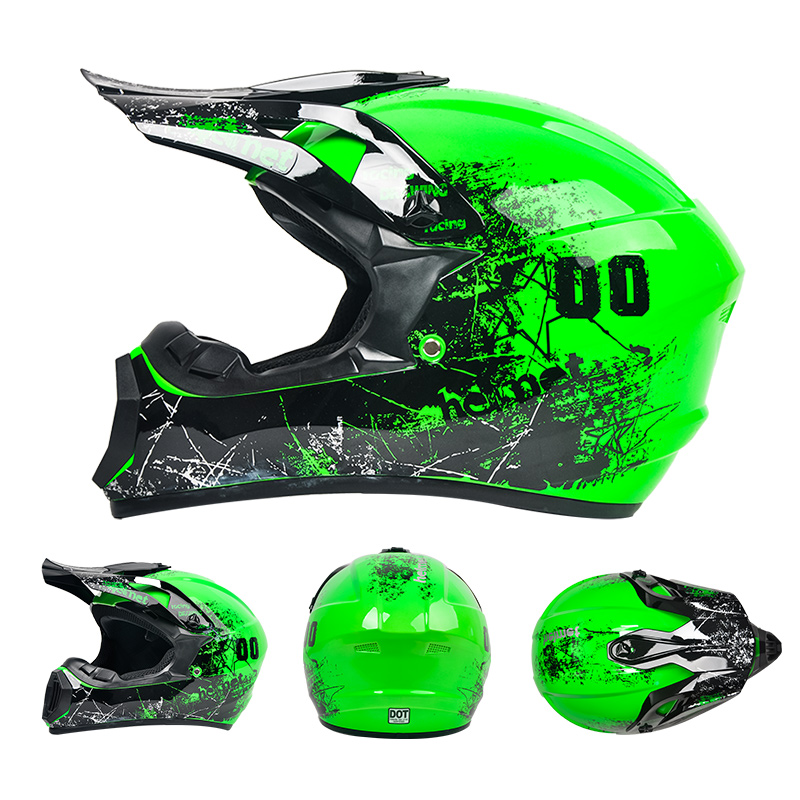 DOT-Approved ABS Off-Road Motorcycle Helmet with GogglesDesigned for trail and off-road riding, this full-face ABS helmet offers extended rear and side coverage. It includes goggles and a face mask, suited for faster impacts and tougher terrain while maintaining comfort.View Product →
Motorcycle commuting and touring
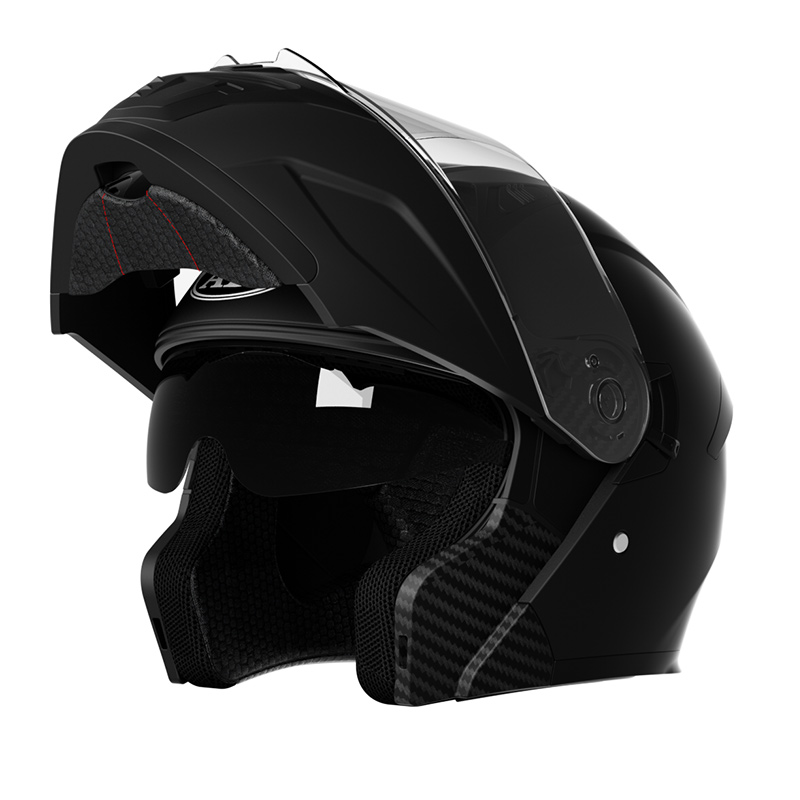
Motorcycle helmets need a retention system and face protection. Full-face helmets enclose the entire head and offer the best overall protection. Flip-up, or modular, helmets allow the front to lift for conversations and traffic stops while still covering the full head when closed. Open-face and half-face helmets keep a cooler feel but expose the lower face to wind, debris, and crash contact. If you ride a motorcycle, the safest starting point is a modular or full-face helmet lineup that matches your head shape.
Kids
Children's helmets are not simply smaller adult helmets. Certification testing accounts for a child's head proportions and lighter neck strength. Look for a shorter shell, lower weight, and an easy-to-adjust retention system. A child who finds the helmet uncomfortable will keep taking it off, so choose a design they are willing to wear.
Fit: The First Decision, Not the Last Check
No material, feature, or certification can save a helmet that moves on the head. A correctly fitted helmet should be snug enough to stay in place during sudden head movement, but not painful after an hour. Measurements matter because helmet shells are made in specific head circumference ranges. The manufacturer's size chart is the starting point, not the final answer.
- Measure the head circumference at the widest point, about one finger width above the eyebrows.
- Compare the measurement with the size chart, then try the size that falls in the middle of your range.
- Put the helmet on and fasten the strap. The shell should sit level, not tilted back like a cap.
- Grip the shell and move it gently side to side. The skin on your forehead should move with the helmet. If the shell slides without moving the skin, it is too loose.
- For full-face and modular helmets, the cheek pads should touch the cheeks firmly. When you open your mouth wide, you should feel the pads push slightly.
- Wear the helmet for 15 to 20 minutes before buying. Uncomfortable pressure points appear after a while, not in the first two minutes.
Small Features That Change Daily Riding
Once fit and certification are handled, the remaining features matter in day-to-day comfort and visibility. A few well-chosen options can make a helmet easier to live with for years.
Double visors
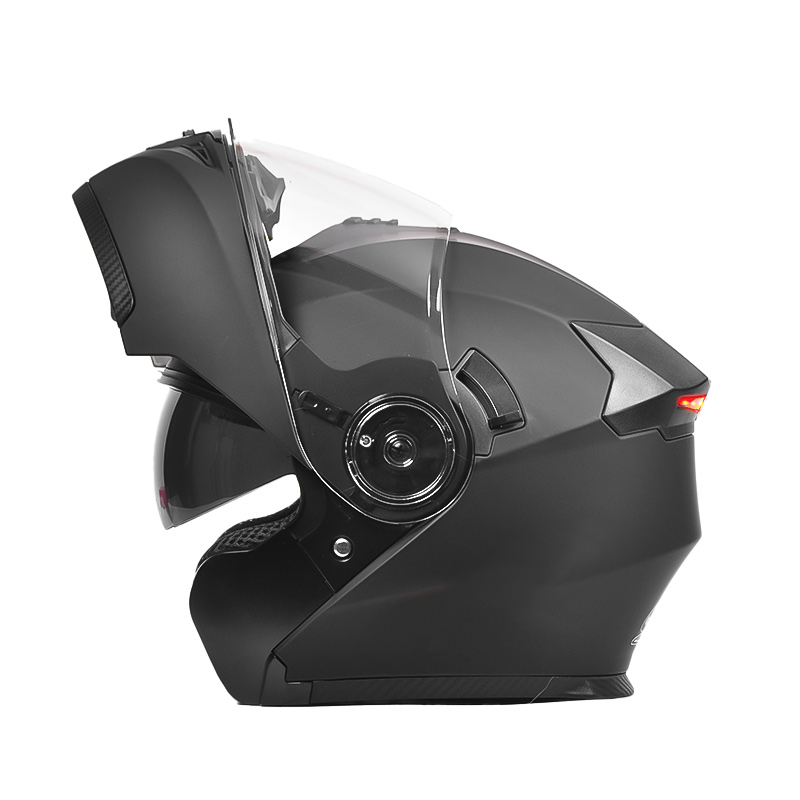
A clear outer visor plus a built-in tinted sun visor solves the common problem of riding into morning sun or into a tunnel. You flip the inner visor down without stopping to swap shields. This is a practical default on motorcycle flip-up, open-face, and full-face helmets.
LED taillight
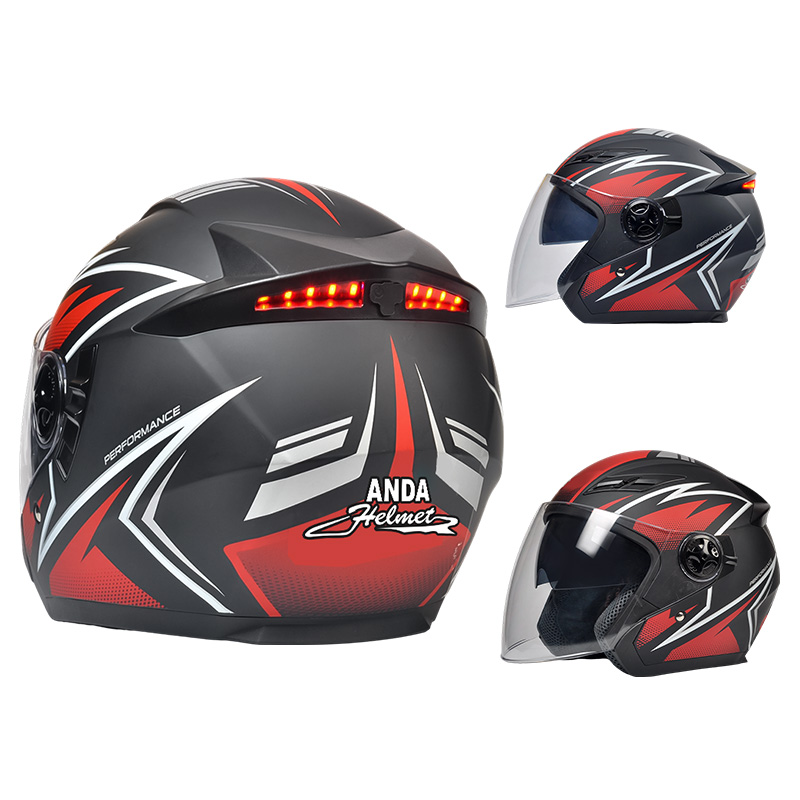
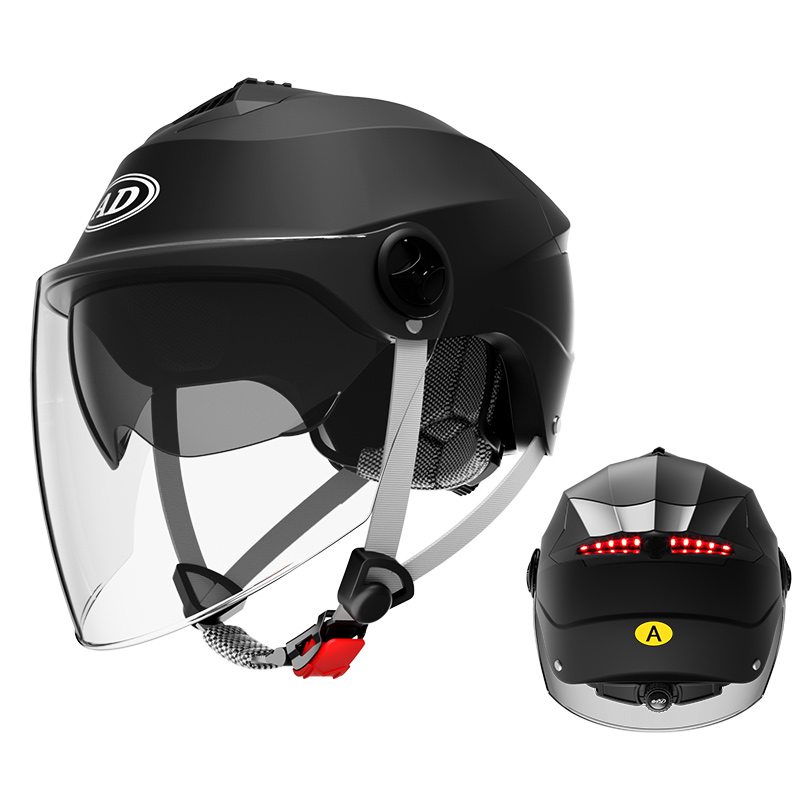
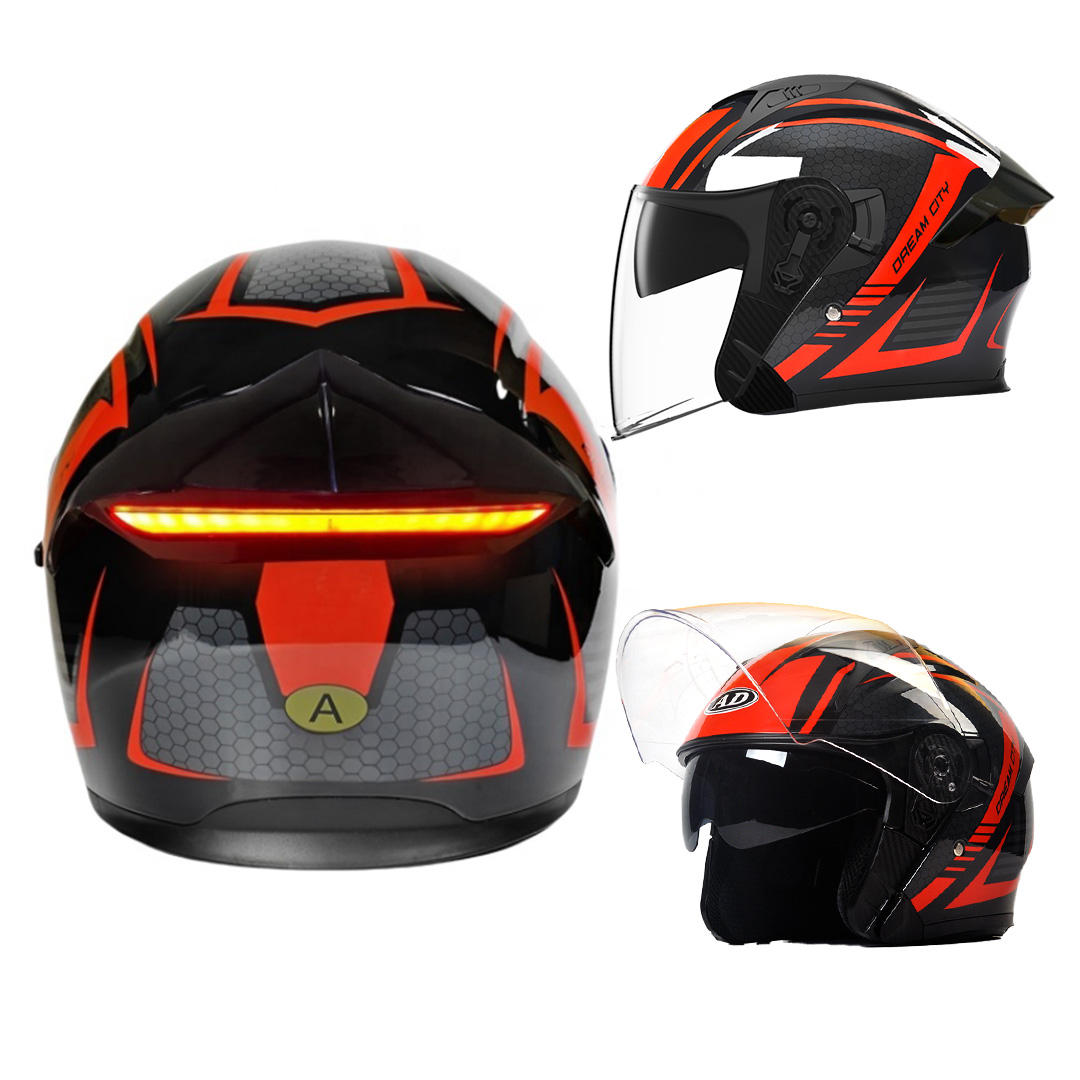
An integrated LED taillight significantly improves visibility from behind, which is essential for commuters and group riders. LED models are common on full-face, open-face, and half-face helmets, with a small rechargeable battery housed inside the shell. Modular models combine the LED taillight with a built-in sun visor in one unit.
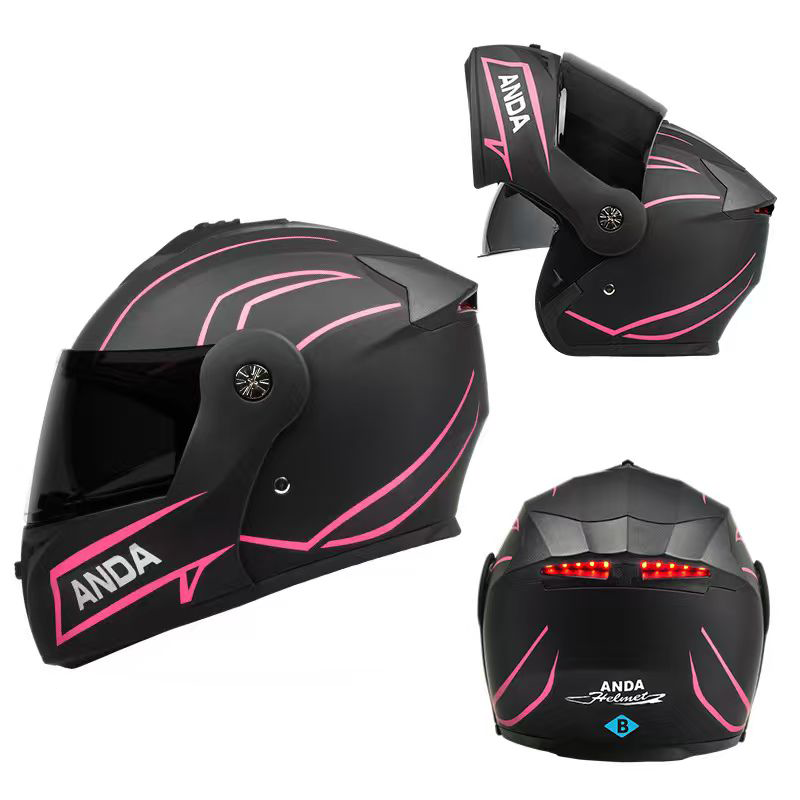 Flip-Up Motorcycle Helmet with LED Taillight and Double VisorsThis modular helmet features an integrated LED taillight with multiple modes for night visibility, along with a built-in sun visor. Its flip-up design and breathable lining suit urban commuting and long rides.View Product →
Ventilation
Check that the vents can be opened and closed with one hand while wearing the helmet. A closed setting is useful in rain and cold wind. Open channels are not a luxury on hot days.
Removable liner and communication compatibility
A washable interior keeps the helmet hygienic after heavy use. Look for pads that unclip from the liner without tools. If you ride with a group or use a phone for navigation, a recess in the EPS liner and enough space around the ear make the difference between a simple communication installation and a DIY modification.
When a Helmet Must Be Replaced
Replace a helmet when one of these conditions is true. There is no credible repair method for an impacted EPS liner, so replacing a helmet after a real hit is cheaper than replacing the alternative.
- After any crash in which the head struck the ground or a vehicle, even if the shell looks undamaged. The EPS liner may be crushed internally.
- After five years from the manufacturing date, which is printed on the retention strap or liner label. EPS degrades with time, and shell adhesives become less reliable.
- When the straps, buckle, or retention dial no longer hold the helmet securely.
- When the shell shows cracks, deep gouges, or permanent deformation.
- When the helmet no longer sits level because the interior padding has compacted.
A Quick Bike Helmet Buying Checklist
Use this short list the next time you are ready to buy:
- Identify the vehicle type and the certification standard that applies to it.
- Measure head circumference and compare with the size chart.
- Decide between full-face, modular, open-face, half-face, or kids styles based on riding conditions.
- Confirm the physical certification label inside the shell. A printed logo on the box is not enough.
- Test the fit: level, snug, no pressure spots, strap tight enough to keep the shell in place.
- Check daily-use features such as double visors, LED taillight, vent control, and washable liner.
- Replace the helmet after five years or after any strong impact.