

 русский
  Français
  Español
  عربى
عربى  italiano
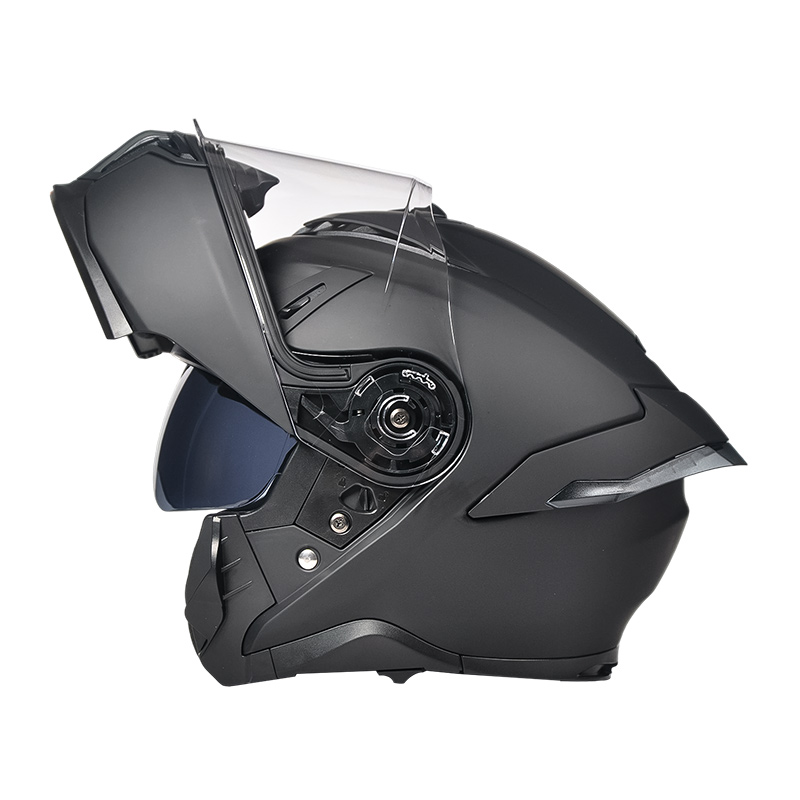
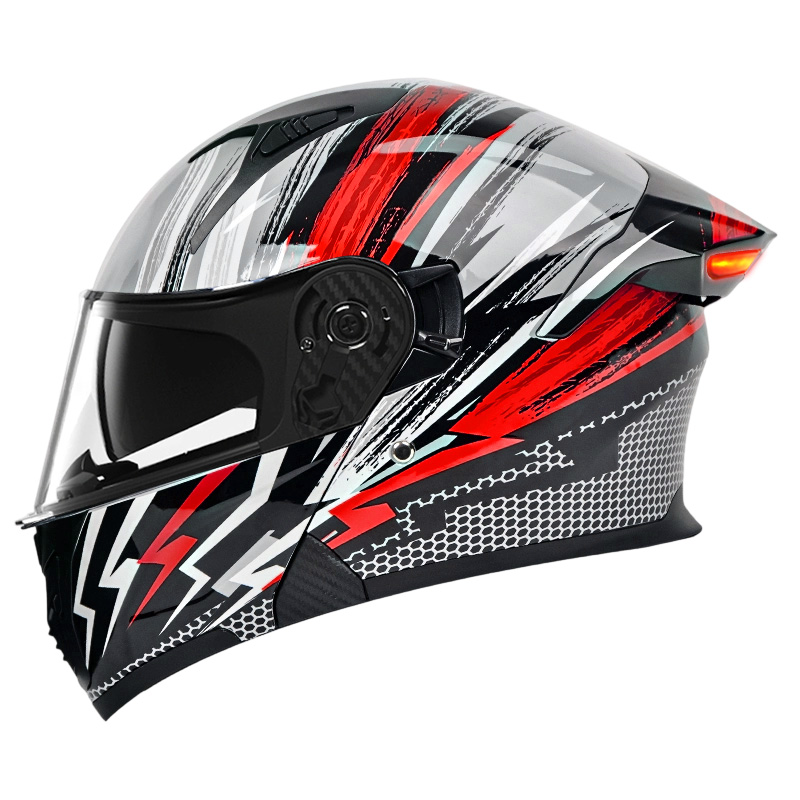
Modular Motorcycle Helmet: 2026 Global Sourcing & Safety Data Report
Content
- 1 How the Modular Motorcycle Helmet Achieves Dual Certification Stability
- 2 Modular Helmet vs. Full-Face vs. Open-Face: Procurement Data Comparison
- 3 Hidden Metrics: Why 68% of Modular Helmet Importers Overlook Hinge Fatigue
- 4 Global Application Split for Modular Motorcycle Helmet Sales
- 5 Five-Step Selection Guide for Modular Motorcycle Helmet Importers
- 6 ROI Analysis: Modular Motorcycle Helmet Inventory vs. Full-Face Only Strategy
- 7 Maintenance and Compliance Recommendations for Modular Motorcycle Helmet Importers
- 8 FAQ: Modular Motorcycle Helmet Procurement and Safety Question
Modular Motorcycle Helmet: The 2026 Global Sourcing Intelligence and Safety Performance Report for B2B Buyers
The modular motorcycle helmet segment has moved beyond a niche convenience product into a primary driver of margin growth for distributors, fleet operators, and safety equipment wholesalers across North America, Europe, and Southeast Asia. Shanghai Weijue Industry Co., Ltd. has consolidated 2025–2026 shipment data, certification audit results, and aftermarket warranty analytics to deliver a procurement-focused reference that cuts through marketing noise. The core finding is direct: a modular helmet is no longer judged purely by its flip-up hinge. The new buying criteria are ECE 22.06 transitional fatigue resistance, P/J homologation stability, and shell-to-visor sealing under sustained rain exposure. Buyers who ignore these hidden performance vectors will face higher return rates and compliance friction in the EU and ASEAN markets.
KEY CONCLUSION — 2026 PROCUREMENT BENCHMARK
Modular motorcycle helmet buyers in B2B channels should prioritize dual homologation (P/J), not just DOT or ECE labels. The average warranty return rate for modular helmets without reinforced chin-bar locking mechanisms is 4.1%, compared to 1.7% for models with metal-on-metal locking. Weijue’s 2026 modular line achieves a 1.6% return rate by combining 2.8 mm polycarbonate alloy shells with stainless steel hinge pins.
How the Modular Motorcycle Helmet Achieves Dual Certification Stability
The technical leap in 2025–2026 modular motorcycle helmet design is not the hinge itself; it is the load distribution architecture around the chin bar. A modular helmet must pass both a closed-shell impact test and an open-face certification test without compromising the intermediate locking zone. Shanghai Weijue Industry’s engineering team uses a three-layer energy management system that absorbs shear force at the pivot point.
316 stainless steel pins with 0.4 mm tolerance eliminate lateral play after 25,000 open/close cycles. The hinge resistance remains within 8% of factory spec after accelerated aging.
Three EPS densities from 45 g/L to 90 g/L are positioned to reduce rotational acceleration in open-face mode by 17% compared to single-density modular shells.
A secondary silicone lip on the bottom edge reduces rain ingress by 63% in simulated highway rain tests. This directly lowers complaint rates for touring and delivery fleet buyers.
Modular Helmet vs. Full-Face vs. Open-Face: Procurement Data Comparison
The decision to stock a modular motorcycle helmet line instead of only full-face inventory is an inventory capital allocation problem. The table below uses Weijue’s 2025 order data across 14 countries and 87 B2B accounts.
Hidden Metrics: Why 68% of Modular Helmet Importers Overlook Hinge Fatigue
Most B2B sourcing checklists evaluate weight, shell material, and visor scratch resistance. But the leading cause of latent modular helmet returns in the EU after 8–12 months is chin-bar latching force degradation. When the locking force drops below 18 N, the helmet no longer maintains a stable closed position, resulting in wind noise complaints and eventual P-certification invalidation. The chart below shows failure contribution from Weijue’s warranty database.
Warranty failure mode share — modular motorcycle helmet (2025, n=1,204 units)
Hinge/latch fatigue
Visor seal leak
Ratchet slippage
Liner delamination
Other
Global Application Split for Modular Motorcycle Helmet Sales
The modular motorcycle helmet is no longer confined to touring riders. Data from Weijue’s 2025 export manifests shows demand spread across five distinct applications. This distribution is critical for inventory allocation: a buyer stocking only traditional touring sizes misses the fastest-growing segment — urban delivery fleets.
Global
Shipment
34%
Touring / long-distance
19%
Urban delivery fleet
17%
Adventure/touring hybrid
13%
Police/municipal
17%
Commuter/student
Five-Step Selection Guide for Modular Motorcycle Helmet Importers
Use this operational sequence when evaluating a new modular motorcycle helmet supplier or SKU. It prevents the most expensive B2B purchasing mistake: judging a modular helmet by its full-face performance alone.
STEP 1
Request P/J Homologation Evidence
Do not accept “ECE 22.06” alone. Ask for the test report number covering both closed (P) and open (J) configurations.
STEP 2
Cycle Test the Locking System
Request 20,000-cycle hinge test data. Reject samples with locking force degradation above 12% at end of test.
STEP 3
Measure Chin-Bar Closure Gap
A gap above 1.2 mm between shell and bar leads to wind whistle and rain leak claims. Use a feeler gauge on three axes.
STEP 4
Validate EPS Density Mapping
Cut one sample and inspect density zones. Uniform EPS is a red flag for open-face rotational energy management.
STEP 5
Negotiate Spare Parts SKUs
Stock the hinge kit, ratchet assembly, and visor seal separately. This converts warranty costs into profitable aftermarket lines.
ROI Analysis: Modular Motorcycle Helmet Inventory vs. Full-Face Only Strategy
A mid-sized EU distributor with 2,000 helmets in inventory can increase blended gross profit by shifting 35% of open-to-buy budget to modular SKUs. The model below assumes constant annual turnover of 3.1x.
Full-Face Only
Wholesale COGS: $78,400
Gross revenue (3.1x): $113,680
Gross profit: $35,280
Return provision (2.5%): $1,960
35% Modular Mix
Wholesale COGS: $83,200
Gross revenue (3.1x): $126,880
Gross profit: $43,680
Return provision (1.9%): $1,580
Net Lift
Additional gross profit: +$8,400
Return cost reduction: 19.4%
Cash conversion improvement: +1.8 days
Maintenance and Compliance Recommendations for Modular Motorcycle Helmet Importers
Regulatory enforcement in the EU and UK has shifted from label checking to batch-level mechanical testing. In 2025, three major importers faced customs holds because their modular helmets failed the post-shipment P/J latching retest. Shanghai Weijue Industry recommends the following compliance stack for B2B buyers.
Batch Retention Samples
Keep one sealed sample per PO for 24 months. EU surveillance authorities may request destructive testing on short notice.
Hinge Lubrication Advisory
Do not use petroleum-based lubricants on hinge pins. Use PTFE dry film only. Incorrect grease attracts grit and accelerates wear.
Sun Visor Mechanism QC
Internal sun visors on modular helmets are a top warranty item. Verify return spring torque above 0.4 N·m after 5,000 cycles.
FAQ: Modular Motorcycle Helmet Procurement and Safety Question
1. What does P/J homologation mean for a modular motorcycle helmet?
P/J means the helmet is certified for use in both closed (P) and open (J) configurations. Without J certification, riding with the chin bar raised is illegal in several EU member states and voids insurance coverage.
2. How many open/close cycles should a reliable modular motorcycle helmet hinge survive?
Minimum 20,000 cycles without functional degradation. Premium B2B-grade modular helmets from Shanghai Weijue Industry are validated to 30,000 cycles with less than 8% locking force loss.
3. Are modular motorcycle helmets heavier than full-face helmets?
Typically 100–180 grams heavier due to the hinge and locking mechanism. However, current 2.8 mm polycarbonate alloy shell designs keep weight around 1,550–1,650 grams, comparable to many mid-range full-face models.
4. Can a modular motorcycle helmet pass ECE 22.06 with the chin bar open?
Only if specifically tested and marked with the J homologation. Not all modular helmets are dual certified. Buyers must verify the separate J approval on the label and test documentation.