

 русский
 Français
 Español
 عربى
 italiano

Why All-Road Bikes Are Ideal: Versatility, Comfort, and Riding Gear Guide
Content
- 1 What an All-Road Bike Really Is
- 2 Why Versatility Makes All-Road Bikes Ideal for Most Riders
- 3 All-Road, Road, and Gravel: A Simple Comparison
- 4 The Details That Decide Whether You Will Love Yours
- 5 Why Head Protection Deserves the Same Attention
- 6 Matching a Helmet to How You Actually Ride
- 7 What Twenty Years of Helmet Manufacturing Taught Us About One-Bike Thinking
- 8 Final Thoughts
Most riders never set out to own three bicycles. They set out to enjoy riding, and somewhere along the way the collection grows because each bike only does one thing well. All-road bikes push back against that habit. They borrow the lively, efficient feel of a road bike and add the composure of something tougher, and for a surprising number of people that combination turns out to be the only bike they actually needed.
What an All-Road Bike Really Is
Strip away the marketing language and an all-road bike is a road bike that has been given room to breathe. The frame keeps the efficient riding position most riders already know, but the designers open up tyre clearance to somewhere between 32mm and 40mm, relax the geometry just enough to add stability, and fit hydraulic disc brakes as standard. The result is a machine that still feels quick when you press on the pedals, yet stops feeling nervous the moment the surface underneath you stops being perfect.
In practice, three numbers tell you most of what matters: how wide a tyre will fit, how long the wheelbase is, and what the complete bike weighs. Everything else, from the groupset to the saddle, can be changed later. Those three cannot, at least not without buying a different frame.
Why Versatility Makes All-Road Bikes Ideal for Most Riders
One bike that covers the whole week
An all-road bike is content on a Monday commute, a Wednesday evening loop, and a Saturday ride that begins on tarmac and finishes on a farm track. That flexibility matters more than most specification tables suggest. Riders who own one genuinely capable machine ride it more often, because there is no decision to make in the hallway and no quiet guilt about leaving the expensive bike at home.
Comfort without giving up speed
Wider tyres run at lower pressure, and lower pressure absorbs the small, constant vibrations that wear a rider down over three or four hours. Because the frame keeps a road-like position and the wheels stay reasonably light, the bike never turns sluggish. You give away very little on smooth asphalt and gain a great deal everywhere else.
Confidence when the route surprises you
Road surfaces change without warning. A shoulder narrows, a fresh repair patch sits in the middle of a descent, a sign sends you onto packed gravel for two kilometres. Disc brakes and larger tyres turn those moments from a test of nerve into a non-event, and confidence is not a luxury. It changes how much of a long day in the saddle you actually enjoy.
All-Road, Road, and Gravel: A Simple Comparison
| Bike type | Typical tyre clearance | Ride character | Where it shines |
|---|---|---|---|
| Performance road | Up to 28mm | Sharp, low, fast | Smooth tarmac and racing |
| Endurance road | 30–34mm | Relaxed but still quick | Long days on mixed tarmac |
| All-road | 32–40mm | Stable, still lively | Tarmac plus light gravel, commuting, light touring |
| Gravel | 40–50mm and beyond | Very stable, more upright | Rough tracks, bikepacking, singletrack |
The categories overlap, and manufacturers move the boundaries every season. The useful question is not which label a bike carries, but whether its clearance and geometry match the surfaces you actually ride on a normal week.
The Details That Decide Whether You Will Love Yours
- Real clearance, not claimed clearance. Measure again with mudguards fitted and with the knobbliest tyre you might realistically use.
- Disc brakes and thru-axles. Consistent stopping power in the wet, plus stiffer wheels that track better through corners.
- Mounting points. Fender mounts, rack mounts, and room for at least two bottles turn a weekend bike into a commuter or a light tourer.
- Gearing range. A sub-compact chainset with a wide cassette keeps steep climbs comfortable without sacrificing top-end speed.
- Frame material and weight. Carbon saves weight and damps road buzz; aluminium costs less and survives careless train carriages.
- Fit above everything. A stable bike that is one size too large will feel slow and vague. Compare stack and reach rather than seat tube length.
- Wheel and tyre setup. Tubeless tyres around 35mm are a sweet spot for mixed surfaces, and they are the cheapest upgrade you will ever make.
Why Head Protection Deserves the Same Attention
We have spent twenty years building helmets, so we will admit our bias openly: riders spend months comparing frame angles and tyre compounds, then pick up whatever helmet is nearest the door. On mixed surfaces that balance is hard to defend. A helmet is the one piece of equipment that has to work when everything else has already failed.
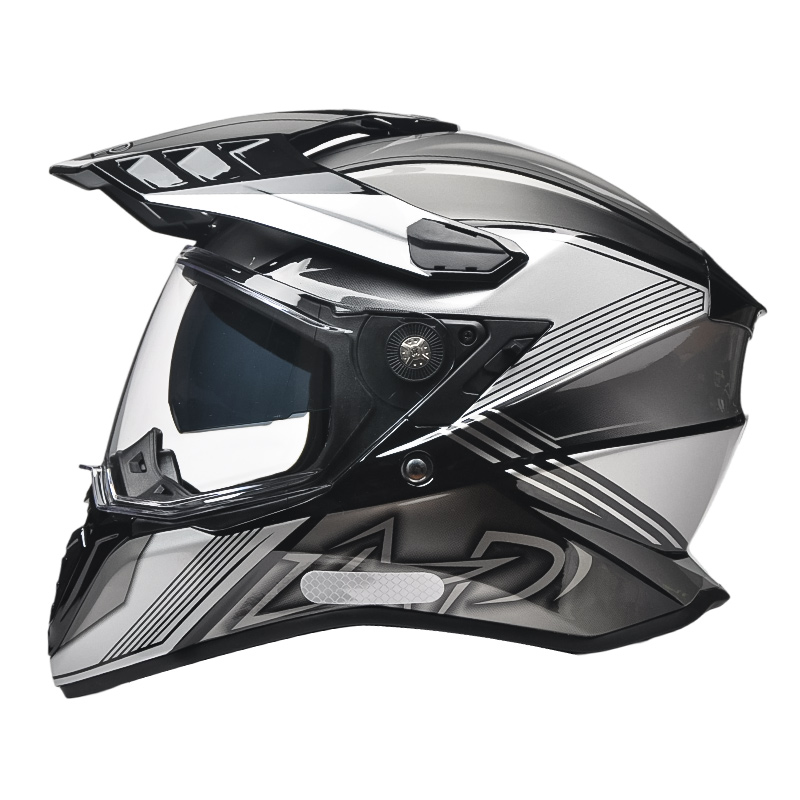
For all-road riding, start with ventilation that keeps you cool on a long climb, a shell light enough that you stop noticing it, and a retention system you can adjust with one hand while wearing gloves. Riders who regularly point their front wheel at loose gravel or offroad tracks often move to a full-face design, which is exactly what our mountain bike offroad model was built for: a DOT-certified shell with a fixed chin bar for rough descents, still vented enough for a warm afternoon.
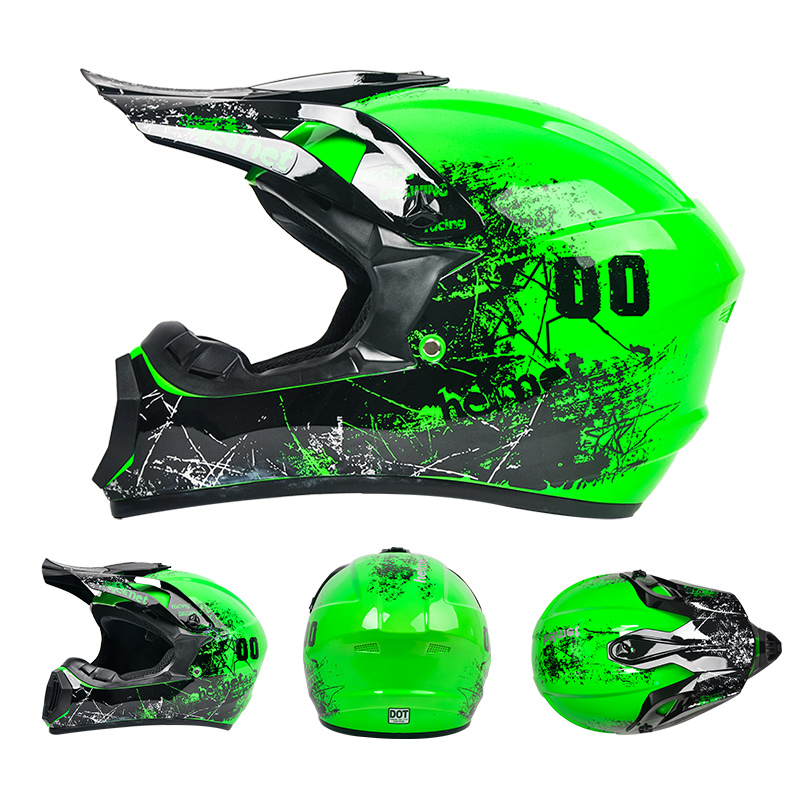 AD Model 116 DOT Full-Face Mountain Bike Off-Road HelmetDOT-approved full-face helmet for gravel and off-road riders, with ABS shell, EPS liner, ventilation, and stable fit for rough descents.View Product →
Matching a Helmet to How You Actually Ride
| Riding pattern | Helmet style | Features to prioritise |
|---|---|---|
| Commuting and city tarmac | Open-face or half-face with a visor | Low weight, wide field of view, quick visor changes |
| Long road days with occasional gravel | Open-face with double visors | Airflow, internal sun visor, washable liner |
| Offroad and mixed terrain | Full-face or modular | Chin bar, DOT certification, goggle compatibility |
| Family and younger riders | Kids open-face | Light shell, bright graphics, certified protection |
Two examples show how far the range stretches. For touring and commuting duties, an open-face helmet with double visors lets you drop the tinted inner lens when the sun appears and raise it again in a tunnel, with no need to stop and swap eyewear. And for families riding together, a light kids helmet with a friendly graphic does something practical: children actually want to wear it.
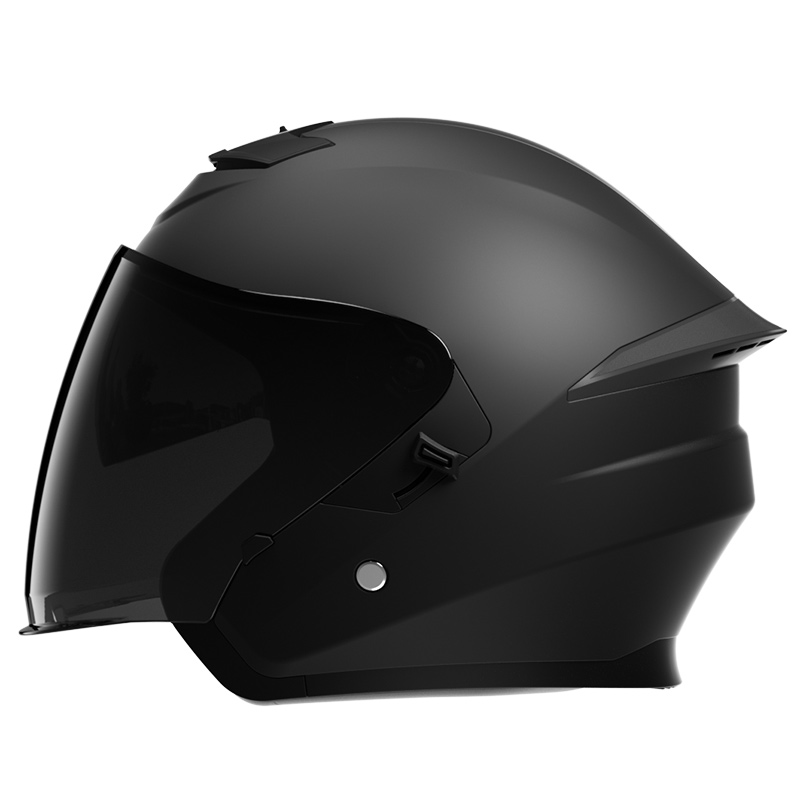 AD 601 DOT Certified Open-Face Motorcycle Helmet with Double VisorsOpen-face commuting and touring helmet with dual visors, ABS shell, EPS liner, ventilation, and Bluetooth slot for everyday riding.View Product →
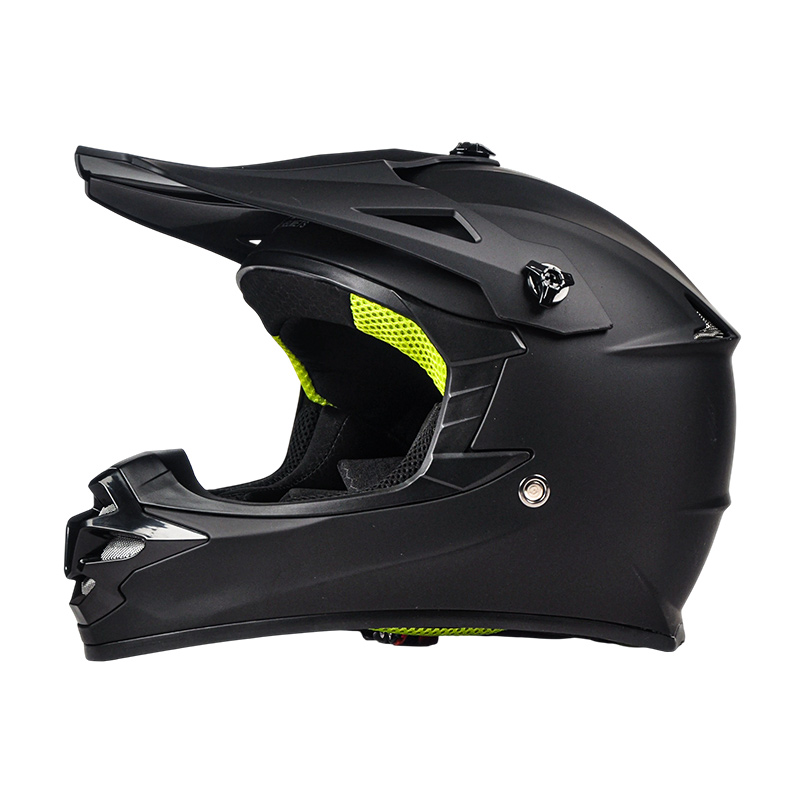 AD RY001 Kids DOT Full-Face Mountain Bike Off-Road HelmetDOT-certified kids full-face helmet for family off-road rides, with ABS shell, EPS protection, ventilation, and colorful goggles.View Product →
What Twenty Years of Helmet Manufacturing Taught Us About One-Bike Thinking
Riders are not the only ones who benefit from versatility. Our own workshop, a 10,000 square metre facility with more than a hundred people and a dedicated accessories subsidiary, has survived two decades of changing standards by building one platform that adapts rather than one product that fits a single market. The same shell can carry different liners, visors, retention systems and shell materials; the same model can be certified to DOT, ECE R22.06, CCC or ISO 9001 requirements depending on where it will be sold.
That approach shapes how we work with brands. We accept OEM and ODM programmes, support full customisation of logos, colours and shapes, and can usually deliver a sample within three days so a buyer can test a concept before committing to volume. Our own AD line is exported to North and South America, the Middle East, Southeast Asia and Africa, which means the compliance questions come up early in almost every conversation. We wrote about that side of the business in our note on how helmet certification affects procurement decisions.
The lesson runs in both directions. A bike that only performs on one surface, or a helmet that only suits one season, eventually gets left in the garage.
Final Thoughts
All-road bikes are ideal for a simple reason: they match real riding rather than an idealised version of it. They keep the speed that makes a road bike satisfying and add the clearance, comfort and calm that make the less perfect roads enjoyable. Choose clearance honestly, keep the fit sensible, and spend a little of the budget on the part that protects you.
If you are sourcing helmets for a brand, a distributor or a retail programme, our helmet manufacturing base in Shanghai is happy to talk through materials, certification and sample timelines. Reach us at Michael@wjhelmet.com or +86-13564394908, or visit our factory in Shanghai to see how we build protection that riders are willing to wear every day.