

 русский
 Français
 Español
 عربى
 italiano

Types of Cycling Helmets: A Complete Guide for Riders, Buyers and Brands
Content
- 1 The Main Types of Cycling Helmets at a Glance
- 2 Road Cycling Helmets
- 3 Mountain Bike Helmets
- 4 Commuter and Urban Helmets
- 5 Kids' Cycling Helmets
- 6 Materials and Construction: What Actually Changes
- 7 Safety Standards That Matter
- 8 Visibility, Comfort and the Details That Get Used
- 9 How to Choose Between the Types
- 10 Where Our Manufacturing Experience Comes In
Ask a dozen cyclists what makes a good helmet and you will hear a dozen answers. A road rider wants airflow and a low profile. A trail rider wants a visor and coverage at the back of the head. A parent wants something light and bright enough that a child forgets it is there. A commuter just wants to be seen in traffic.
The helmet industry answers those needs with distinct product families, and the differences between them are not cosmetic. We have been building helmets for more than twenty years, and below we break down the main types of cycling helmets, what each one is designed to do, and how to decide which one belongs on your head.
The Main Types of Cycling Helmets at a Glance
Before the detail, here is a side-by-side look at the categories most riders meet when they start shopping.
| Helmet Type | Coverage | Typical Riding | Signature Features |
|---|---|---|---|
| Road and aero | Top and sides, open ears | Fast road riding, long distances | Light shell, deep ventilation, slim profile |
| Mountain bike trail | Extended rear coverage | Trails, mixed terrain, climbing | Short visor, deeper rear protection |
| Downhill and BMX full-face | Whole head plus chin bar | Lift-served descents, dirt jumps | Chin bar, thicker shell, downhill standard |
| Commuter and urban | Rounded, durable shell | Daily city riding, e-bikes | Reflective details, integrated lights |
| Recreational and multi-sport | Basic coverage | Family rides, casual paths | Simple fit system, lower price |
| Kids | Scaled shell | Bikes, balance bikes, scooters | Low weight, easy buckle, bright colors |
The table is a starting point, not a ranking. A well-made helmet in any of these categories protects the rider it was designed for. The real mistake is choosing a helmet built for a different kind of riding.
Road Cycling Helmets
Road helmets are shaped by airflow and weight. Long channels run from the front of the shell to exhaust ports at the back, so moving air carries heat away during sustained effort. Shells are thin, profiles narrow, and the tail often extends slightly to smooth airflow behind the head.
What is worth paying attention to on a road helmet:
- Deep, unobstructed vents, especially above the forehead
- A retention system that tightens evenly around the whole head, not only the back
- Low weight, but not at the cost of coverage
- An adjustable rear cradle if you ride with long hair
Mountain Bike Helmets
Off-road riding changes the risk profile. Riders fall onto rocks and roots rather than smooth tarmac, they tip backwards on steep climbs, and they spend long stretches working hard at low speed. MTB helmets respond with more coverage, deeper rear protection, and a visor that keeps sun and branches out of the eyes.
Trail and cross-country helmets
These are the everyday mountain bike lid: more coverage than a road helmet, a short visor, and generous ventilation for slow climbing. Many cover the temples and the base of the skull noticeably better than a road helmet of similar weight.
Downhill and full-face helmets
When gravity does most of the work, riders move to full-face designs with a chin bar, thicker shells and stronger retention. Downhill and BMX helmets are tested to a stricter downhill standard, because the crashes they see are faster and harder. A full-face shell weighs more and vents less, so it is a poor choice for a long, hot climb, but on a lift-served descent it is the right tool.
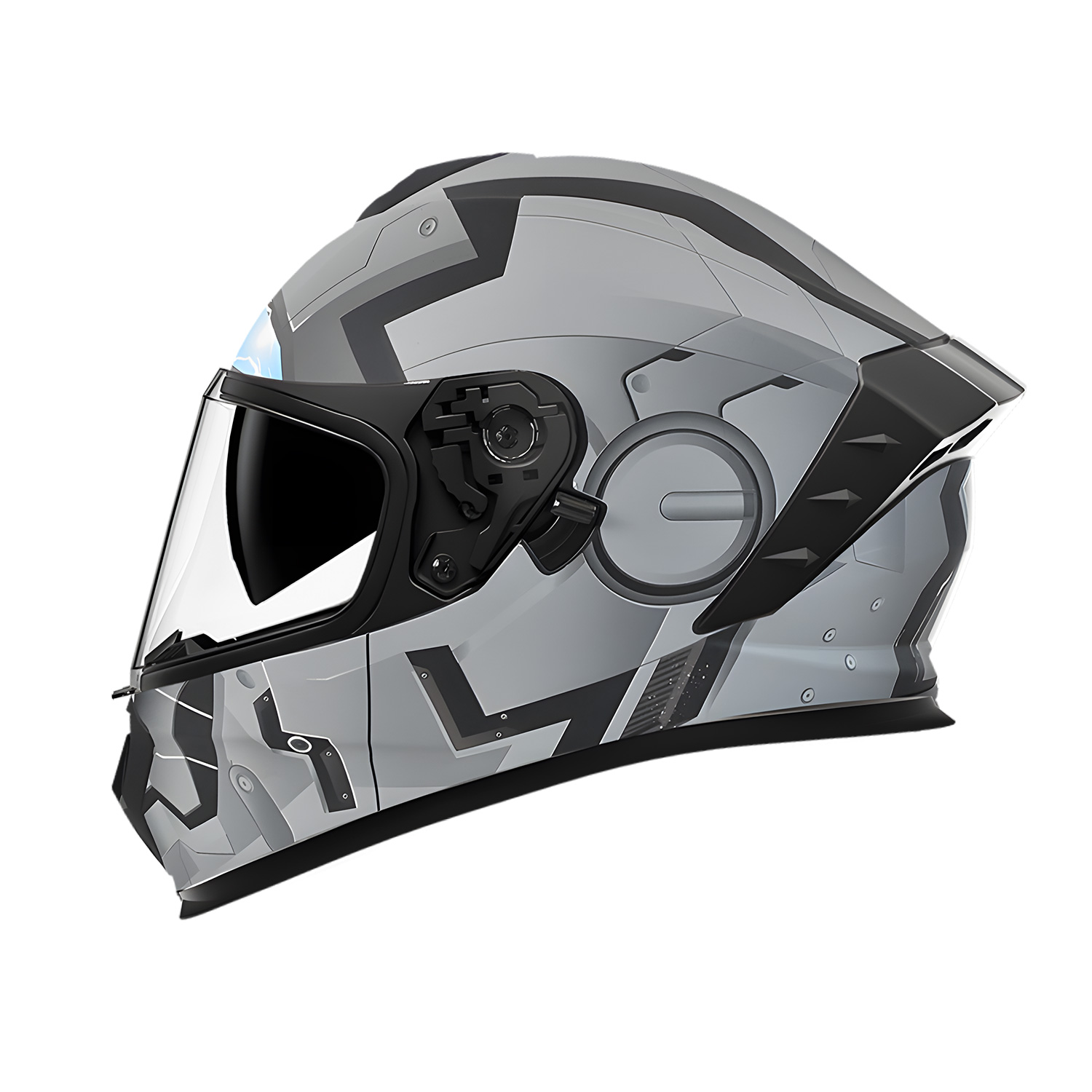
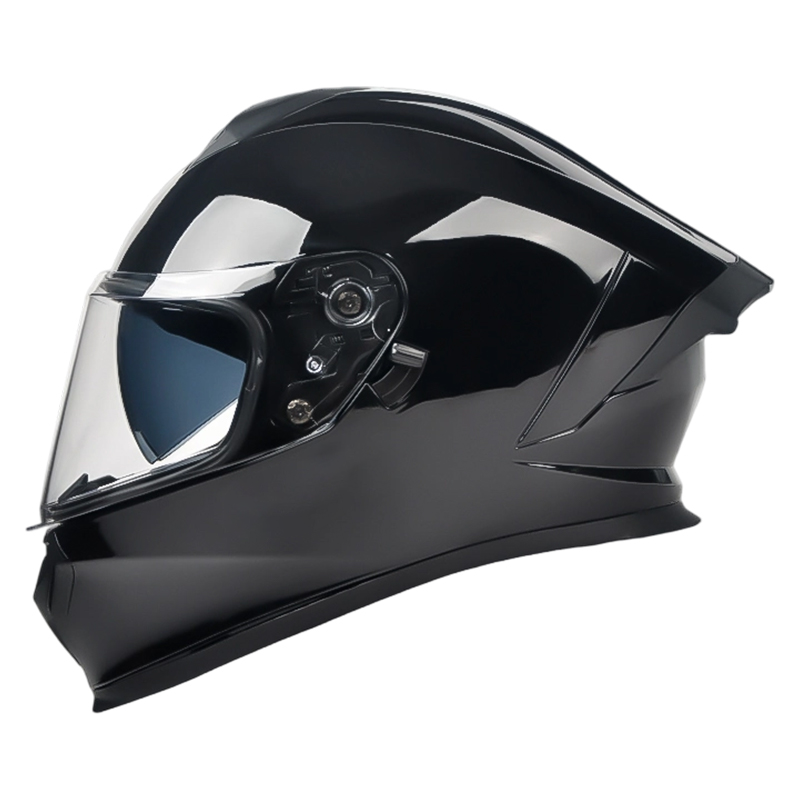
Our 116 mountain bike offroad helmet shows how a full-face shell can still be tuned for off-road use, pairing a DOT-certified build with the coverage downhill and trail riders ask for.
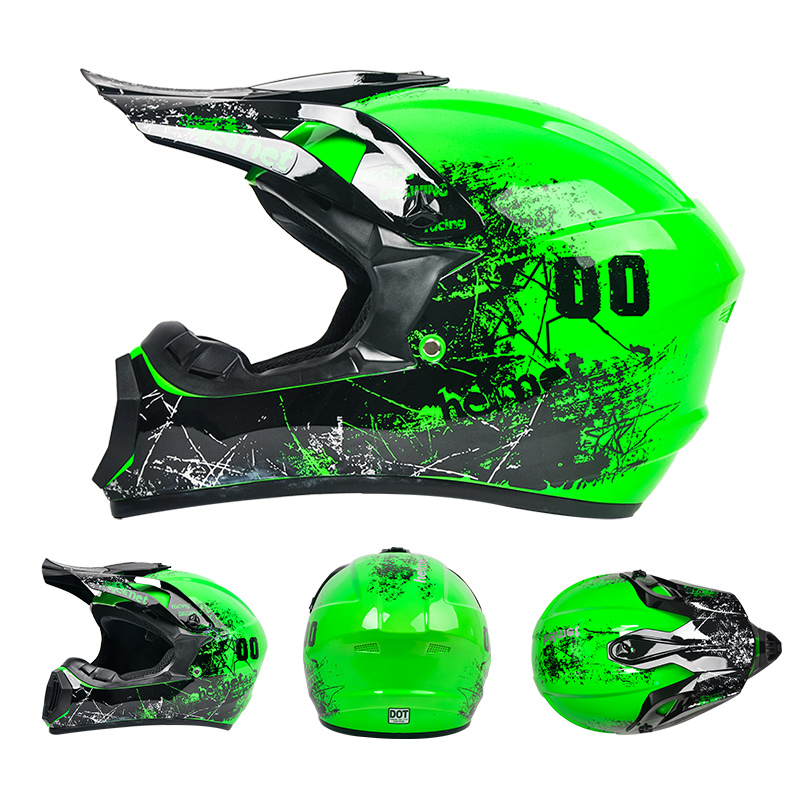 116 Mountain Bike Off-road Helmet DOT Motorcycle HelmetThe 116 mountain bike off-road helmet has passed the DOT authoritative safety certification and meets the basic safety standards of riding equipment. It strikes a bala...View Product →
Commuter and Urban Helmets
Commuter helmets sit between road and mountain designs. They tend to be rounder and a little more robust, with simpler ventilation and a shape that looks at home with everyday clothes. The priorities shift too: because urban riders share space with cars, visibility and quick adjustment matter more than aerodynamic drag.
Features worth having on a city helmet include reflective straps or shell details, a buckle you can work with gloves on, and an integrated light or a clean mounting point for one. E-bike riders should look closely at coverage at the back of the head, since speeds are higher than on a pedal bike and falls happen in traffic.
Kids' Cycling Helmets
Children's helmets are not simply smaller adult helmets, or at least they should not be. A child's head grows quickly, the neck is proportionally weaker, and the helmet has to be light enough that a small rider forgets it is there. Children's models typically use a scaled shell, a wide range of adjustment, and a buckle that pinches less than a standard one.
Bright colors and cartoon graphics do real work as well. They make the helmet something a child wants to put on, and a helmet that stays on protects far better than a perfect one left at home.
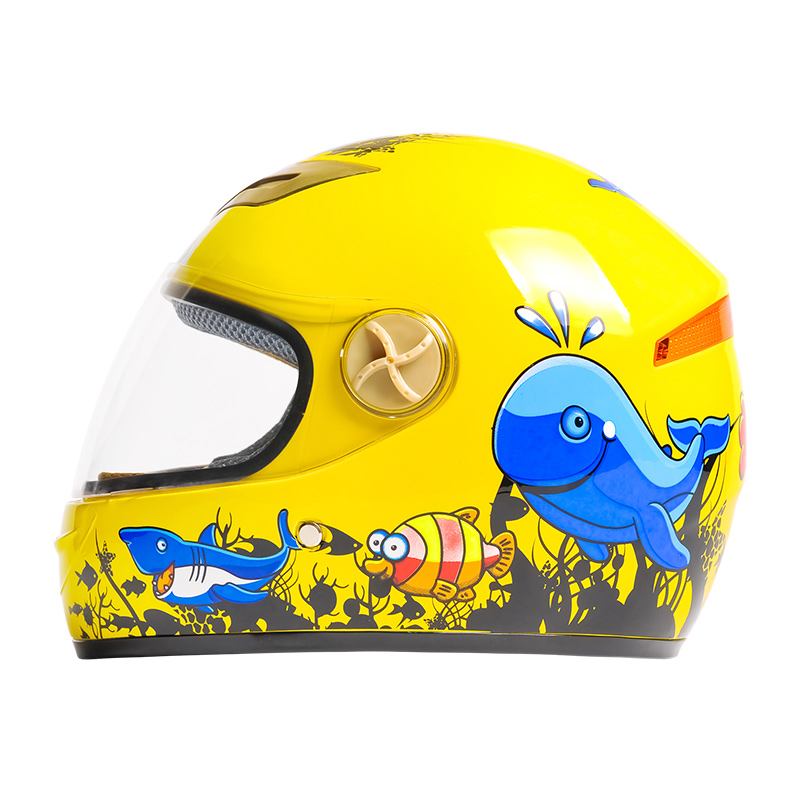
Our ry001 kids mountain bike offroad helmet follows that thinking, with a DOT-certified shell sized and weighted around younger riders.
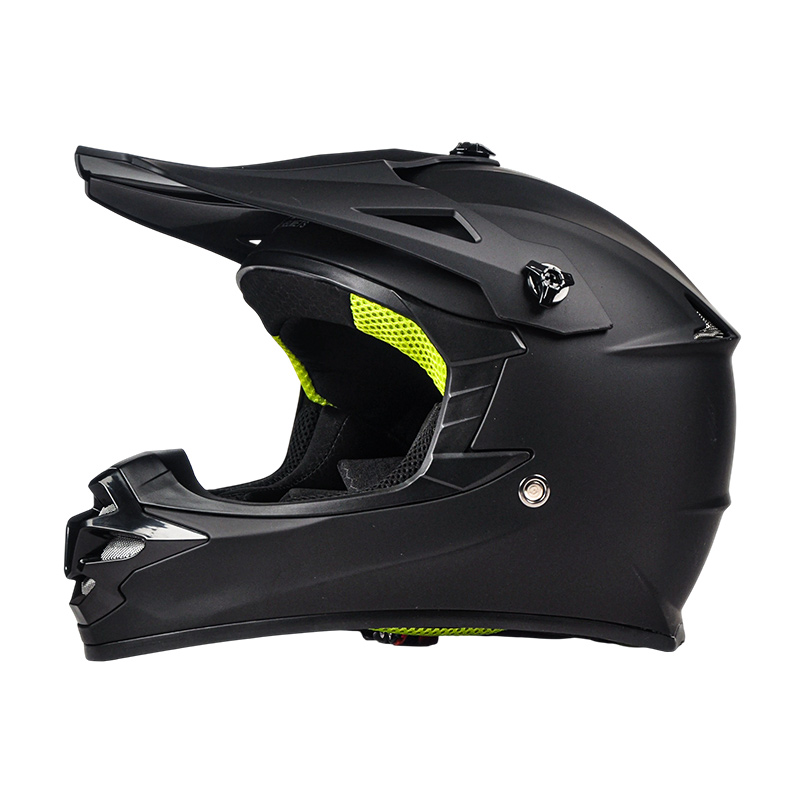 RY001 Kids Mountain Bike Off-road Helmet DOT Motorcycle HelmetRY001 kids' mountain bike off-road helmet has passed the DOT authoritative safety certification and meets the basic safety standards of riding equipment. It strikes a ...View Product →
Materials and Construction: What Actually Changes
Two helmets with a similar shape can feel completely different because of how they are built. The liner is almost always expanded polystyrene, the foam that absorbs impact by crushing. The shell is where materials diverge.
- In-mold polycarbonate: the shell is bonded to the liner during molding, which keeps weight low and ventilation easy
- ABS hard shell: a tougher outer layer over the liner, heavier but more resistant to everyday scuffs
- Fiberglass: strong and reasonably priced, with good impact behavior
- Carbon fiber: the lightest option, stiff, and the most expensive
Material choice is a trade-off rather than a ladder. A carbon shell is not automatically safer than a well-made ABS one. It is lighter and stiffer, and the price reflects that.
Safety Standards That Matter
Certification is the part of the buying decision that is easiest to check and hardest to fake. The standards a cyclist is most likely to see are:
- EN 1078, the European standard for pedal cyclists and skateboarders
- CPSC 16 CFR 1203, the United States federal requirement for bicycle helmets
- ASTM F1952, the downhill standard for full-face mountain bike helmets
- For motorized use, DOT and ECE requirements apply instead
A helmet approved for a motorcycle is not automatically approved for a bicycle, and the reverse is also true, because the test speeds and impact points differ. Buy from a seller who can tell you exactly which standard a model is certified to. Vague claims about high safety levels are worth nothing next to a test report or a label inside the shell.
Visibility, Comfort and the Details That Get Used
A helmet only protects you if you wear it, and you only wear it if it is comfortable. Three details keep coming up in our conversations with riders and buyers.
Visibility matters most in low light. A helmet with an integrated LED tail light makes a rider easier to spot from behind, and the idea has moved from motorcycle helmets into commuter and cycling designs.
Sun management comes second. A tinted inner visor or a peak that can be angled down in low sun does more for comfort on a long ride than a gram of saved weight.
Adjustment comes third: a dial or ratchet at the back, a strap that splits cleanly around the ear, and pads in more than one thickness. These are cheap to add and hard to live without.
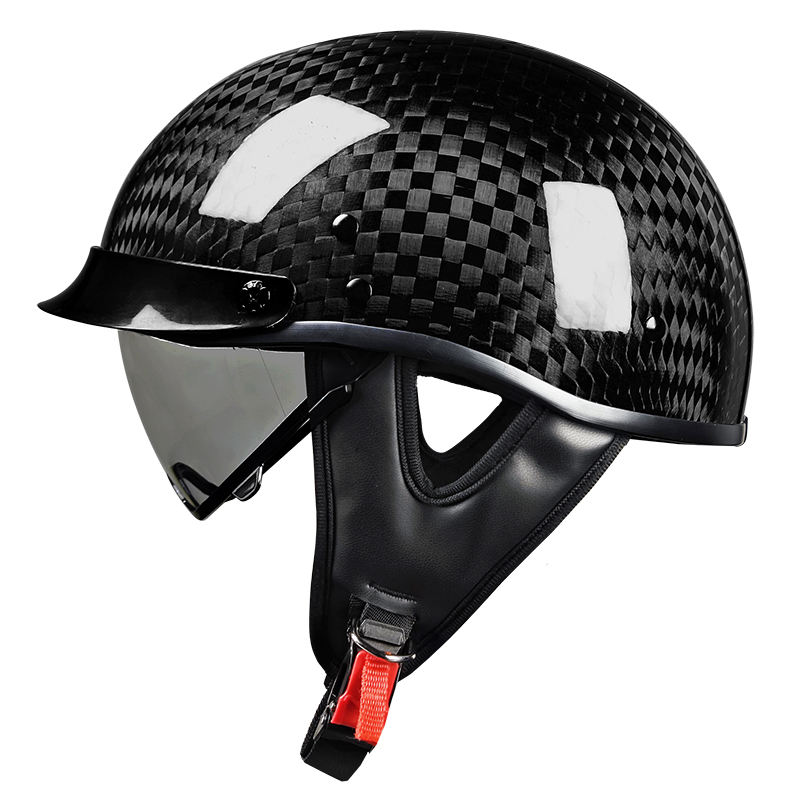
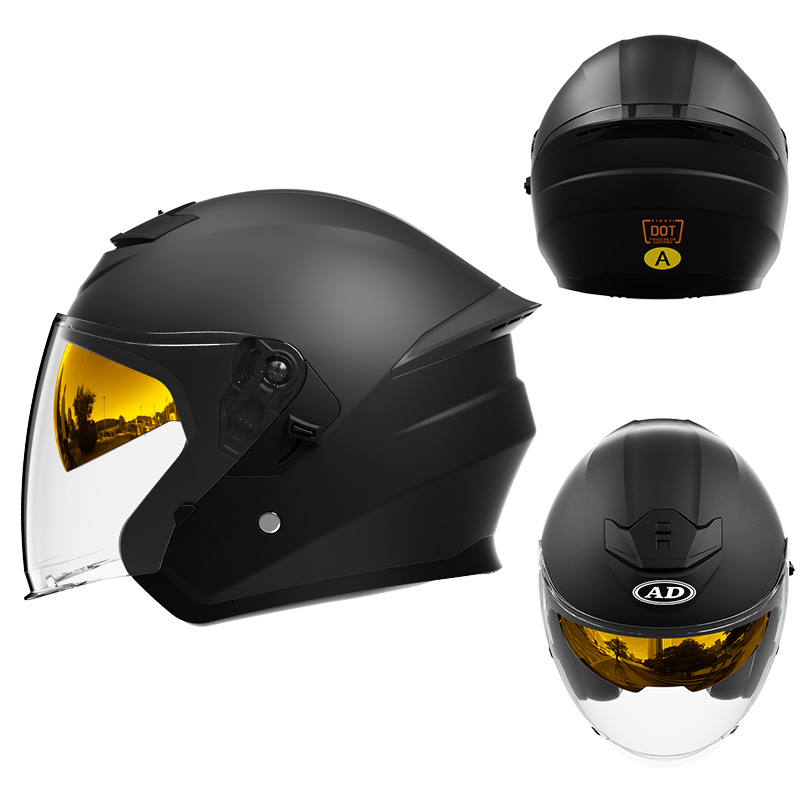
Our 818 half-face helmet combines a safety tail light with double visors, which is the same thinking applied to a road-focused shell.
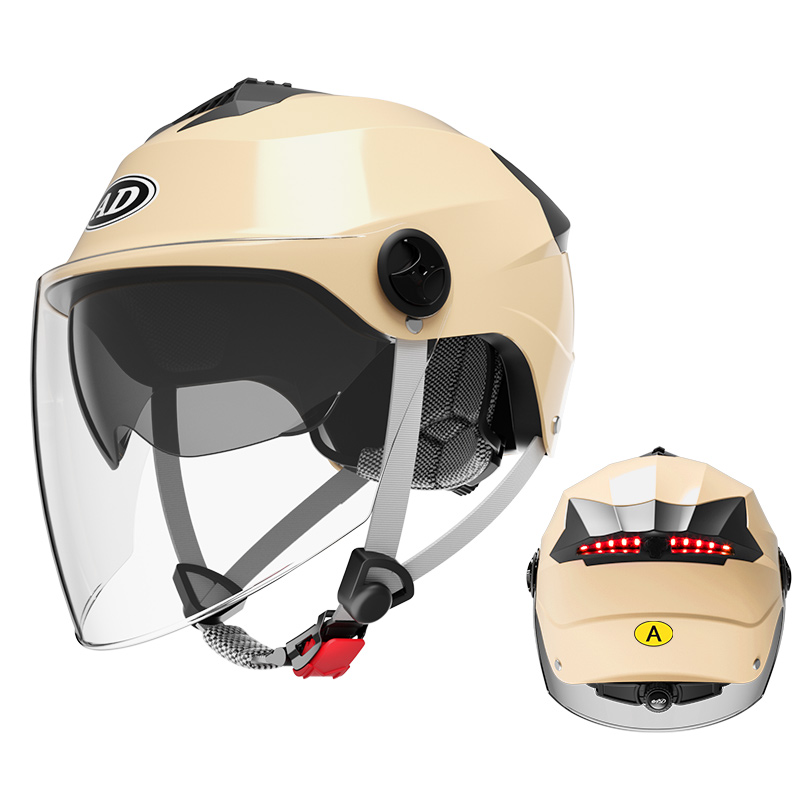 818 LED Safety Taillight Half Face Motorcycle Helmet Double Visors HelmetThe 818 half-face helmet has successfully passed the safety certification and meets the basic safety standards for motorcycle riding equipment. The helmet is equipped ...View Product →
How to Choose Between the Types
- Start with the riding you do most, not the riding you imagine doing.
- Check which standard the helmet is certified to for that discipline.
- Measure your head and match the size chart before deciding you need another size.
- Adjust the retention system so the helmet sits level and low on the forehead.
- Close the buckle and open your mouth wide; the helmet should press down slightly.
- Replace the helmet after any serious impact, and inspect the shell and pads each season.
Where Our Manufacturing Experience Comes In
Our own workshop builds motorcycle helmets, but the two disciplines are closer than they look. Shell layups, liner densities, retention systems, visor mechanisms and ventilation channels follow the same engineering logic whether the rider pedals or twists a throttle.
For buyers sourcing across categories, that overlap is useful. Our helmet range covers full-face, flip-up, open-face, half-face and kids' shells, so a distributor can fill several shelves from one factory and one set of certifications. If you are planning next season, our 2026 modular helmet sourcing and safety data report gathers the standards, materials and cost questions that come up most often in that process.
Whichever type you land on, the fundamentals do not change. The helmet should fit closely, sit level, and stay put when you shake your head. Choose the category that matches your riding, confirm the certification, and then buy the one you will actually wear.
If you are a brand, importer or distributor comparing helmet types for your own market, we are always happy to talk through shell options, materials and certification requirements.